|
|
“Our Earth is alive. It’s not a supply house or a sewer, it is our larger living body with vast evolving intelligence that we are totally a part of and we can draw on.”
—Joanna Macy |
|
|
It is often remarked that though it may seem that we face numerous global crises of different kinds – environmental, social, political, cultural, economic, psychological, and so on – these crises are interrelated. The term ‘metacrisis’ has been invented to describe this predicament. However, these crises are not merely adventitiously interrelated because each has an impact on and reinforces each of the others – though that may be true – but because they share roots at a deeper level in a way of thinking about ourselves and the world. What are these roots?
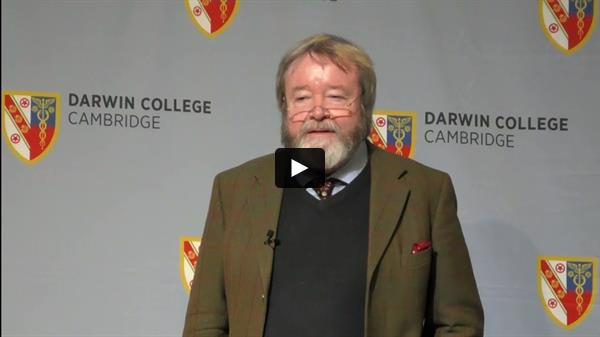
Hemisphere theory, deeply grounded as it is in Darwinism and subsequent neuroscientific research, shows us that a new, far more complex, and more nuanced, appraisal of the bipartite brain – the product of the last 30 years of research – brings new insights into the human condition. There are vitally important clues to the understanding of human cognition and motivation embodied in the structure of the brain. These clues help explain why certain apparently unrelated phenomena tend to occur together, why outcomes that appear paradoxical are in reality predictable, and why many attempts to remedy them will prove inadequate since they are tackling only the manifestations of a problem that we need to address at its root – both in the psyche of the individual and that of a civilisation viewed as a whole. ‘Know thyself’ commanded the Delphian oracle: we need urgently to learn to do so, and this synergy of philosophy and neuroscience appears to offer the most promising way.
Dr. Iain McGilchrist is a Quondam Fellow of All Souls College, Oxford, an Associate Fellow of Green Templeton College, Oxford, a Fellow of the Royal College of Psychiatrists, a Fellow of the Royal Society of Arts, and former Consultant Psychiatrist and Clinical Director at the Bethlem Royal & Maudsley Hospital, London. He has been a Research Fellow in neuroimaging at Johns Hopkins Hospital, Baltimore and a Fellow of the Institute of Advanced Studies in Stellenbosch. He has published original articles and research papers in a wide range of publications on topics in literature, philosophy, medicine and psychiatry. He is the author of a number of books, but is best-known for
The Master and his Emissary: The Divided Brain and the Making of the Western World (Yale 2009); and his book on neuroscience, epistemology and ontology,
The Matter with Things: Our Brains, Our Delusions and the Unmaking of the World (Perspectiva 2021).
|
|
|---|
|
The
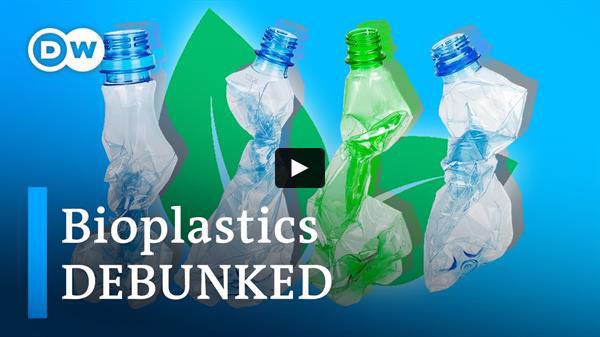
Planet vs. Plastics campaign unites students, parents, businesses, governments, churches, unions, individuals, and NGOs in an unwavering commitment to call for the end of plastics for the sake of human and planetary health, demanding a 60% reduction in the production of plastics by 2040 and an ultimate goal of building a plastic-free future for generations to come.
Plastics extend beyond an imminent environmental issue; they present a grave threat to human health as alarming as climate change. As plastics break down into microplastics, they release toxic chemicals into our food and water sources and circulate through the air we breathe. Plastic production now has grown to more than 380 million tons per year. More plastic has been produced in the last ten years than in the entire 20th century, and the industry plans to grow explosively for the indefinite future.
More than 500 billion plastic bags—one million bags per minute—were produced worldwide last year. Many plastic bags have a working life of a few minutes, followed by an afterlife of centuries. 100 billion plastic beverage containers were sold last year in the United States. That’s more than 300 bottles per inhabitant. A few of them will be converted into park benches; none of them will be made into new plastic bottles and 95% of all plastics in the US won’t be recycled at all.
The fast fashion industry annually produces over 100 billion garments. Overproduction and overconsumption have transformed the industry, leading to the disposability of fashion. People now buy 60% more clothing than 15 years ago, but each item is kept for only half as long. Approximately 85% of garments end up in landfills or incinerators, with only 1% being recycled. Nearly 70% of clothing is made from crude oil, resulting in the release of dangerous microfibers when washed and continued contribution to long-term pollution in landfills.
Social injustice and fashion are directly intertwined, with exploitative working conditions, low wages, and widespread child labor. For far too long, the industry has relied on a fractured supply chain and an almost total lack of governmental regulation.
[Learn more]
|
|
|---|
|
| |
|
Rising inequality is a ubiquitous problem, encompassing every geographical region and nation in the world. Inequality can be contended to have replaced unemployment as our most vital economic issue. The causes are multifarious, including accelerating globalisation, plutocratic politics, excessive emphasis on ‘meritocratic’ pay, declining public expenditure, and social protection combined with the high rates of return on ‘capital’ compared to the overall economy’s growth rate.
Excessive inequality prevents social mobility and contains the seeds of social conflict and even civil wars. Most crucially, excessive and rising inequality makes democratic politics and governance unsustainable. High inequality may be a causal factor behind the decline of democracy and the rise of autocracy and populism that we are witnessing globally. In the ultimate analysis, the reduction of inequality necessitates wealth taxes.
.
.
|
|
|---|
|
|
|
Keywords and meta-markers: hyper-globalization; global inequality; group-based inequality; pauperization; plutocracy; multi-generational opportunity hoarding; speculative financialization |
|
Source:
Murshed, S., & Regnault, B. (2023).
Inequality: The Scourge of the Twenty-First Century. Contemporary Social Science, 18(5), 580-598.
DOI: 10.1080/21582041.2023.2283139
.
.
. |
|
|---|
|
|
|
|---|
|
| |
Neoliberalism eviscerated the value-sharing ethos of the post-war Golden Age (1945-73), seeking to maintain social cohesion in civil society by ‘managing the discontent of the losers’. This involved reconciling working households to the realities of the neoliberal labour market by means of coercion, distraction, and debt accumulation — the latter serving to limit the growth of consumption inequality in the face of burgeoning income inequality. The global financial crisis (GFC) and Great Recession undermined the process of household debt accumulation, creating a crisis of neoliberal accumulation.
Key to the institutional renewal required to address this crisis will be managing the discontent of the losers inherited from the neoliberal era. One possibility is Authoritarian Neoliberalism, based on increasingly illiberal amplification of the ‘coerce and distract’ elements inherited from the Neoliberal Boom (1990-2007). The only viable alternative is Social Capitalism. This involves a renewal of social democracy that manages the discontent of the losers at its source, by creating inclusive and sustainable growth that both reduces the need and desire for illiberalism in the sphere of civil society.
_
|
|
|---|
|
|
|
Keywords and meta-markers: social structure of accumulation; capital-citizen accord; household debt; inequality; populism; illiberalism |
|
Source:
Setterfield, M. (2024).
Managing the Discontent of the Losers Redux: A Future of Authoritarian Neoliberalism or Social Capitalism? The New School for Social Research, Working Paper 01/2024.
Available at SSRN: https://papers.ssrn.com/sol3/papers.cfm?abstract_id=4687740
.
.
.
.
.
.
|
|
|---|
|
|
|
|---|
|
|
NB:
Metascope is not optimized for small-resolution screens and mobile devices, and it may not render equally well in all email clients and applications. For the best reading experience, we recommend viewing this publication in the web browser of your desktop computer, notebook, or tablet. Gmail and some other email clients may clip the displayed part of the publication. To enjoy the full issue, click on the “view entire message” link at the bottom of this message or select the “view this email in your browser” option at the top.
This curated collection contains 35 unique entries (textual, graphic and video materials), generally referenced by titles in bold font. It will be easier for you to access the full content of the issue by knowing this, even if your email program ends up clipping the displayed part of the publication. Note that we usually place event announcements and links for open-access book downloads toward the end of the publication. This is demo issue #2. To access demo issue #1, follow this link. |
|
|---|
|
| |
In response to climate change projections, scientists and concerned citizens are increasingly calling for changes in personal consumption. However, these calls ignore the true relationship between production and consumption and the ongoing propagation of the ideology of overconsumption. In this article, we draw from the work of Herbert Marcuse and Guy Debord to explain the ideology of overconsumption and its implications for addressing global climate change.
We illustrate how production drives consumption, how advertising promotes false needs and excess, how these power relations are concealed, and how they undermine social and ecological well-being. Specific to climate change, continued widespread support for increasing levels of production and economic growth will undermine efforts to reduce carbon emissions and limit global warming. Given the relationships between production and carbon emissions, effective mitigation efforts will require significant systemic changes in work, production, consumption, advertising, and social norms.
_
|
|
|---|
|
|
|
Keywords and meta-markers: advertising; overconsumption; artificial desires; manufactured needs; climate change; contradiction concealment socioeconomic metabolism; economic growth; degrowth; production; work time reduction |
|
Source:
Stuart, D., et al (2020).
Overconsumption as Ideology: Implications for Addressing Global Climate Change. Nature + Culture, 15(2), 199-223.
DOI:10.3167/nc.2020.150205
.
.
.
.
.
.
.
.
. |
|
|---|
|
|
|
|---|
|
| |
What is the carbon footprint of capital and how are emissions associated with asset ownership distributed across the population? This research paper presents new estimates on the inequality in individual carbon footprints across wealth groups in the US, Germany and France. The authors introduce a novel framework to measure individual carbon footprints, which extends beyond the traditional consumption-based approach. The key novelty is to include in the carbon footprint of individuals not only emissions linked to consumption and personal lifestyle, but also the emissions associated with asset ownership (such as real estate, equities or pension assets).
The wealthiest 10% emitted nearly 38 tonnes of CO2-equivalent (tCO2e, or tonnes) per capita and per year on average in France, 50 tonnes in Germany and 102 tonnes in the US, when ownership emissions are fully taken into account. Instead, when only their consumption emissions are tracked, the footprint of the wealthiest 10% of the population is of 16 tonnes in France, 18 tonnes in Germany, and 52 tonnes in the US (still 26 times higher than the Paris Climate Agreement’s target of 2 tons per capita).
The top 10% account for a majority (70-85%) of emissions related to capital ownership. In fact, inequality in wealth-related emissions appears to be higher than wealth inequality in general, because the wealthiest own assets more carbon intensive than the middle and the poorer segments of society.
Carbon taxes on consumption typically fall disproportionately on the low-income, low-emitter groups. On the contrary, a carbon tax on the carbon content of assets or of investments, would mainly fall on wealthy emitters.
_
|
|
|---|
|
|
|
Keywords and meta-markers: ownership-related emissions; consumption-related emissions; carbon inequalities; individual responsibility; carbon footprint; carbon-intensive goods and services; foreign capital in national emissions |
|
Source:
Chancel, L., & Rehm, Y. (2023).
The Carbon Footprint of Capital. World Inequality Lab (WIL) Working Paper 2023/26. World Inequality Database.
World Inequality Lab is a joint effort of the Paris School of Economics and the University of Berkeley, California.
https://wid.world/news-article/the-carbon-footprint-of-capital/
.
.
.
.
.
_ |
|
|---|
|
|
|
|---|
|
| |
The latest phase of capitalist development brought a series of critical processes to the foreground, drastically reshaping economic and social conditions of reproduction, social strata of identity and class, as well as the planetary biosphere and its climate. Serious vulnerabilities and contradictions have emerged around the core institutions of capitalist development, the state, the market and the money form of capital, heading to questions about post-capitalist futures. The relevance of such a perspective is given by capital’s systemic crisis, i.e. a polycrisis concerning the evolutionary variation and transformation of technology, nature and work, as mediated by capital.
This paper considers the role of heterodox economics in opening new perspectives, the question of scalability of socio-economic order, the heritage of the “socialist calculation debate” and its ongoing relevance for discussions on “post-capitalism” today and finally the potentials of computational simulation and agent-based modelling for the development of more just and sustainable socio-economic structures. Faced with the contemporary polycrisis, we can no longer afford “capitalist realism”.
.
_
|
|
|---|
|
|
|
Keywords and meta-markers: post-capitalism; polycrisis; socio-ecological transformation; utopia; commons; labor theory of value; money; computational simulation; climate change; critical political economy; cultural evolution; heterodox economics |
|
Source:
Pahl, H., et al. (2023).
Envisioning post-capitalist utopias via simulation: Theory, critique and models. Review of Evolutionary Political Economy, 4, 445–465.
https://doi.org/10.1007/s43253-023-00112-y
.
.
.
.
.
.
.
|
|
|---|
|
|
|
|---|
|
| |
|
|
Norwegian sociologist Johan Galtung, who has developed an academic understanding of peacebuilding and is known as “the father of peace studies,” passed away on February 17, 2024, at the age of 93. |
|
|---|
|
|
|
|---|
|
|
As the headlines daily show, wars are terrible occurrences. They see human beings behaving at their worst, maiming and slaughtering each other in large numbers; achieving their ends, even if they do so, at enormous economic and social cost, with an appalling loss of life. Yet the use of armed force is only one of the four ways by which humans can acquire whatever material or ideal resources they may desire. I have defined these as the four sources of social power—military, ideological, political and economic—traceable across human history. Why do humans so often use military power, not cooperative norms, economic exchange or political diplomacy to attain foreign-policy goals?
By Michael Mann (New Left Review, No. 145, Jan/Feb 2024) |
|
|---|
|
|
—Francesca Albanese, UN Special Rapporteur on the occupied Palestinian territory (Report to the UN Human Rights Council, March 26, 2024) |
|
|
Written
and read by Pulitzer-prize-winning journalist and writer Chris Hedges |
|
|---|
|
| |
Our traditions are ancient, but they are also processes, and paths of adaptation. The leadership model is about shifting with different contexts. Any community design can have adaptive processes built into it. We’ve always been changing and moving in response to our relationships with place and context. That’s what we do. So people would have to become agile enough to do that.
Modern humans are still limited by this lens of separation from nature. By naming nature and having a word for it, we pretend to become separate and stand out of that system, but we are not. The endpoint that people would have to reach would be to reinvest themselves back in nature, but this brings us back to the problem that most of us are landless. We do not hold lands, and if we do, we hold them individually as tiny little patches that we are encouraged to speculate on.
By Tyson Yankaporta (Green European Journal, July 27, 2023) |
|
|---|
|
 |
Consilience Learning Circles (formerly
Consilience Think Tank) is now a testing ground for our new learning and critical-thinking series being constructed at the intersection of philosophy, political science, heterodox economic theory, systemology, environmental thought, and traditional ecological knowledge, as well as utopian, cultural, and design studies. These open-ended series encourage a transdisciplinary dialogue on ends, ways, and means of deep green transformation of societies toward post-capitalist and post-liberal ecological civilization.
The series is intended to build the capacity for practical emancipatory interventions of active citizens in the fields of human activity locally and globally, in addition to cultivating a strong interpretive potential and serving as a hermeneutic and public-education platform outside neoliberal academia’s programmatic, ideological, and operational confines.
The 2024-2025 featured series are:
-
Metanoia (ongoing)
-
Oikonomia (soft launch scheduled for summer 2024)
-
Paideia (ongoing)
-
Phrónēsis (scheduled for winter 2024/2025)
-
Technê (scheduled for spring 2025)
The learning circles syllabi are iteratively designed and modified as our participatory action inquiry progresses. Retiring the “think tank” part of the original name of our transdisciplinary knowledge venture underscores our deepening commitment to genuine democratization of knowledge and decolonization of science, alongside our experimentation with innovative modes and forms of intersectoral, collaborative learning firmly rooted in robust civic values and social solidarity.
To request the spring schedule of the co-learning sessions, contact us at think@hawaii.edu. |
|
|---|
|
|
About Metanoia Series
The Greek word “metanoia” denotes a fundamental change of mind, a reorientation of heart, a profound transformation of outlook, of a person’s vision of the world and of himself, and a new way of loving and relating to others and God. It is often used to characterize a fundamental change in thinking leading to a fundamental change in behavior. That is what anchors our research collective’s understanding of the nature of change associated with sustainability transitions—they are not collections of objects or issues “out there” waiting to be fixed or technical problems to be solved (such as making sure there are enough electric charging stations so all the cars choking our highways and neighborhood streets are powered by ‘clean energy’).
On our reading, sustainability transitions are, first and foremost, acts of becoming— transformations or self and society via conscious cultural evolution—achieved through a heartfelt intention and effort to increase individual and collective self-awareness and seek purposeful and meaningful self-actualization in replacing the life-threatening cognitive and operational paradigm with a life-affirming one. Neoliberalism tempts us with convenient bright-green lies that breakthrough technologies and supporting technocratic policies can avert our descent into a climatic Hades without upsetting our insatiable desire for ever more things and continued economic growth. Those committed to a change of heart and mind understand that the capitalist system, irrespective of the guises and sheepskins it wears, is inherently anti-ecological (“it’s not a bug, it’s a feature,” to put it simply).
The Metanoia Series seeks to contribute to the vital collective effort of imagining, interrogating, and cultivating the ethos of post-capitalist ecological civilization—a comprehensive and coherent system of ethical foundations and imperatives, a table of virtues and vices—that can powerfully inform the process and structure of just, peaceful, and unpostponable sustainability transitions, including the ordering of the logics of subordinate social, economic, political, and technical transformations.
A second dimension of these learning series is about unlearning: identifying and hospicing the worldviews, corresponding bodies of knowledge and methodologies of inquiry and action that failed our own species, drove to extinction many others on a shared evolutionary journey, and that remain completely inadequate for enabling consequential change implied by deep green transformation.
The first open-learning initiative developed as part of Metanoia Series is
Radical Ecosophy Colloquia that we would like to launch in the next couple of months in collaboration with several island communities of faith. Drop us a note if you wish to support this effort. |
|
| |
For well over a century, radicals have debated whether systemic change might come through reform or revolution. Strategists — particularly within the socialist tradition — have disagreed on whether gradual steps might incrementally bring about a new society, or whether a sharp break with the existing political and economic order is required.
During the New Left of the 1960s, Austrian-French theorist André Gorz attempted to move beyond this binary and present another option. Gorz proposed that through the use of “non-reformist reforms,” social movements could both make immediate gains and build strength for a wider struggle, eventually culminating in revolutionary change. A certain type of reform, in other words, could herald greater transformations to come.
By Mark Engler & Paul Engler (Jacobin, 7/22/2021) |
|
|---|
|
Public libraries and parks as beloved spaces which people use on a voluntary basis have an incredible potential to be the ultimate learning grounds for convivencia, the capability for co-existence. Social scientific research shows that more robust civic communities enhance the performance of democratic institutions. By building the capabilities of staff and visitors to feel at ease with friction, convivencia-led policies enhance the city’s overall quality of life.
|
|
|---|
|
By Tommi Laitio & Sebastián Cortesi (Bloomberg Center for Public Innovation at Johns Hopkins University, 10/31/2023) |
|
|---|
|
|
|
Meritocracy refers to the idea of a social system in which people achieve their social position, economic rewards and success based on their ability, talent and hard work. Cheerleaders for meritocracy tend to contrast it with social structures in which distinction and prestige are hoarded by an elite few – usually ‘feudal society’. But critics of those who claim that we already live in a meritocracy argue that the playing field is not level, that unrestrained capitalism makes it less so, and that the claim is useful to the already privileged to disguise these facts and to justify and extend their wealth and power.
By Jo Littler (Red Pepper, 3/12/24) |
|
|---|
|
From Benjamin Franklin to Henry Ford, the rich and powerful have long exploited the press to promote their interests. The American Revolution was the first of many episodes from U.S. history in which the press – and the popular formats and channels through which news is communicated to the public – was used to spread disinformation and legitimize falsehoods. The similarities between past and present are numerous: from politicians producing fake newspapers to outmaneuver their rivals, to reporters lying about their location in order to produce “local”(ish) content, to billionaires buying news outlets to create their personal propaganda organs. Today, such behavior undermines the notion that journalism is an integral part of a healthy democratic society – compounding already daunting challenges facing every media organization and further eroding public trust in their work..
By Stuart Anderson-Davis (Columbia Journalism Review, 2/23/24) |
|
|---|
|
|
|
|---|
|
|
How asset managers acquired the world
Asset management companies like BlackRock, Vanguard and Macquarie have avoided real scrutiny for decades, but their secretive activities are starting to attract attention from political researchers and academics. What do these companies do, and what risk do they pose to society?
Author and academic Brett Christophers sets out to answer this question in his new book,
Our Lives in Their Portfolios: Why Asset Managers Own the World. He sat down with Aaron Bastani for a crash course in the world of asset management, discussing the dangers of financialization, how UK infrastructure has been gutted by privatization, and what we can learn from the case of the City of Chicago vs. Morgan Stanley.
|
|
|---|
|
|
This article critiques the concept legitimacy, particularly as it is employed in territorial claims. Examining the entangled history of rights, private property, and territorial sovereignty, I attempt to dismantle the validity of legitimacy’s logic. Most immediately, this examination of territorial claims speaks to the ongoing crisis in Palestine but has vivid parallels in indigenous discourse as well.
Arguments over legitimacy only foment endlessly arbitrary contestations over primacy, which reify Eurocolonial notions of territorial possession. The argument presented within is that decolonization is not a matter of extending sovereignty to subjugated and marginalized populations. Rather, decolonization demands the elimination of sovereignty altogether, particularly the exclusive rights of exploitation that are granted autonomous sovereigns.
[Full story]
By Scott Schwartz (Resilience, 3/14/2024) |
|
|---|
|
Because of the graciousness of Jim Dator and the World Futures Studies Federation I was fortunate to have spent over a decade in close contact with Johan Galtung. He spent much of the 1980s in Honolulu, Hawai‘i, running seminars at the University. I was working for the Hawai‘i Judiciary then as a futurist, and in 1987, Galtung became my advisor for my doctoral dissertation.
His skill, given he was a speaker of at least ten languages, was his ability to take complex ideas and communicate them in ways that the reader, the listener, could easily understand. When I first heard him speak on his structural theory of imperialism, I immediately understood why the poor – those in the periphery – related more to the elite, the center within their own regions, instead of with the periphery, and the periphery of the periphery, the downtrodden globally.
By Sohail Inayatullah (Transcend Media Service, February 26, 2024) |
|
|---|
|
|
|
Economist Joseph Schumpeter stated that analysis must be preceded by a pre-analytical cognitive act that he called “vision,” in order for analysis to have something to analyze. Visions can be clarified by parables. A parable, of course, is a little story that teaches a big lesson that opens ones eyes. Parables do not have to be historically true stories, but the ones here considered are.
It is evident that the institutions and policies of an ecological economy in a full world, will require a much more solid ethical foundation than that prevailing today. Economics must rethink its reduction of objective value to subjective preference, and ecology must rethink its reduction of objective value to purposeless neo-Darwinist materialism. To combat the force of growthism by appeal to subjective preference and/or materialist determinism will be futile. Political economy began as a part of Moral Philosophy. Ecological economics requires returning to that historical starting point and re-thinking economics in the light of ecology, philosophy, and religion. It also requires the foundation of a pre-analytic vision of the economy as a subsystem of a finite sustaining biosphere subject to the laws of thermodynamics and ecology. In terms of policy, it means that qualitative improvement (development) must replace quantitative increase (growth) as the path of progress.
By Herman Daly (Real-World Economics Review, No. 102/2022) |
|
|---|
|
Universal basic income (UBI) has captured the attention of many progressives over the past several years. Simply put, it’s the idea that every citizen should receive an unconditional transfer of money on a regular basis, ideally sufficient to meet their basic needs. Economic anthropologist Jason Hickel argues that while providing people with cash payments has benefits, guaranteed employment and public services are a better option for transforming our economy.
By Jason Hickel (Current Affairs, 1/31/2024) |
|
|---|
|
|
|
|---|
|
|
Open Critical Inquiry:
Learning to Ask the Right Questions |
|
|---|
|
Essential Critical Questions (ECQ) are those that stimulate deep reflective thinking and critical inquiry. They can help focus our attention on issues vital for just and peaceful sustainability transitions, reveal our cognitive blindspots, frame our dispositions to settle controversies fairly, “straighten out” our reasoning when dealing with situations of uncertainty, and trigger generation of big ideas and creative approaches for tackling complex, intractable, and truly wicked problems. |
|
|---|
|
What is knowledge? What is the primary purpose of higher education? What are the forms of knowledge needed for a true sustainability transition? Can there be resilience without sustainability? What is the function of science in a just and peaceful sustainability transformation? What does it mean to be a public servant at the end of the world? What is required to create fundamental epistemic and social change that drives sustainable decision-making and behavior change? How do we keep economic growth from cannibalizing the very fabric of our society and the ecological balance essential for our survival? Is it possible to reconcile the demands of an economy predicated on perpetual growth on a finite planet with the imperative to preserve human dignity, promote sustainable living, and foster a harmonious relationship with other members and elements of the ecosphere? What alternatives can we imagine?
|
|
We just started generating OCI’s list of essential critical questions, and we invite intellectual input from members of Hawai‘i civil society, as well as fellow knowledge workers laboring in various institutional domains—scientists, physicans, journalists, librarians, educators, and other members of island intelligentsia.
In light of the approaching Earth Day, what essential critical question(s) should we include in the next issue of Metascope? Please make your critical thought contribution to ideas@hawaii.edu. |
|
|---|
|
|
More than a decade ago, critical ecopedagogue Richard Kahn expressed his fears and hopes regarding Education for sustainable development (ESD). He feared that ESD would be short lived and marginalized and would develop an instrumental pedagogy of one-sided transmission of knowledge, yet hoped for ESD to encompass three types of “ecoliteracies”: technical/functional, cultural and critical.
After an assessment of current ESD, as reported by UNESCO, this paper concludes that his two first fears were unfounded, while his hopes regarding ESD’s pedagogical content were largely not met. To better understand the result, Luc Boltanski’s and Éve Chiapello’s analysis of “the new spirit of capitalism” is mobilized. According to it, current capitalism integrates “artistic critique” on e.g., lack of autonomy and creativity with greater ease than “social critique” with respect to e.g., poverty and inequality. This might explain what ecoliteracies that are integrated into ESD.
.
|
|
|---|
|
|
|
Keywords and meta-markers: planetary ecological crises; environmental education; pedagogical greenwash; ecopedagogy; the “banking method“ vs the “problem-posing“ method of education; systemic thinking; cultural ecoliteracy; marginalization of social critique; co-optation of artistic critique |
|
Source:
Warlenius, R.H. (2022).
Learning for life: ESD, ecopedagogy and the new spirit of capitalism. The Journal of Environmental Education, 53(3), 141-153.
https://www.tandfonline.com/doi/full/10.1080/00958964.2022.2070102
.
. |
|
|---|
|
|
|
|---|
|
| |
It may be hard to imagine how bullshit, or being strategically indifferent to the veracity of one’s assertions, might ever be morally permissible. Yet to categorically denounce it is to find oneself burdened with defending the impossibility of justifiable bullshit, the indefeasibility of truthfulness and the inculpability of inveterate bullshitters.
A much more tenable position is to expand one’s notion of bullshit to include unintentional indifference to veracity while also characterizing bullshit (whether strategic or unintentional) as wrong only when it constitutes negligence. Once bullshit is redefined in this fashion it becomes apparent that its preponderance in contemporary society is the work not of those who bullshit intentionally, but of those who uncritically consume and transmit the bullshit of others. Any attempt to disrupt the spread of negligent bullshit thus does well to consider our epistemic obligations not only as perceived experts, but as listeners. It is in this respect that the early Indian Buddhist critique of testimony proves quite helpful in reducing gullibility and, thereby, the likelihood of unintentional, yet negligent, bullshit.
_
|
|
|---|
|
|
|
Keywords and meta-markers: Buddhist epistemology; social epistemology; epistemic authority; negligence; testimony; truthfulness; strategic indifference to veracity; antirealism; agnotology |
|
Source:
Harris, T. (2023).
The Wrong of Bullshit. Social Epistemology. DOI: 10.1080/02691728.2023.2267501
https://www.tandfonline.com/doi/full/10.1080/02691728.2023.2267501
.
.
.
.
.
|
|
|---|
|
|
|
|---|
|
| |
In this urgent decade when American democracy faces the challenge of decarbonizing the U.S. electric grid and assuring that the economic benefits of our energy transition are equitably shared, many solar energy researchers and activists are searching for new ways to partner with the civic sector. Instead of treating energy users as passive customers, experts understand the importance of engaging community as active decision-makers, beneficiaries, and communicators for a just energy transition. Distributed solar technology offers more democratic potential than small savings on individuals’ electric bills. Energy experts working on the Solar Commons community solar model at the University of Minnesota are piloting demonstration projects with community partners in Arizona and Minnesota. These solar commons aggregate savings through power purchase agreements that create 25-year peer-governed revenue streams to support mutual aid and reparative justice work in neighborhoods.
This article describes a Solar Commons research project in Arizona, with a conversation among the public artists who partnered with the legal research team to co-create communication and peer governance tools that will allow DIY Solar Commons to iterate throughout the US as a new institution in our civic sector. Images of the Solar Commons public art demonstrate how the artists helped expand the vision of solar energy from the iconic individual solar panel to a technology embedded in community justice and in a complex human-more-than-human environment.
.
|
|
|---|
|
|
|
Keywords and meta-markers: just energy transition; community solar; community economy; commons; technology-community partnerships; public art; counter-enclosure |
|
Source:
Milun, K., et al. (2021).
The Role of Public Art in Solar Commons Institution-Building: Community Voices from an Essential Partnership among Artists, Community Solar Researchers, and Activists. Interdisciplinary Journal of Partnership Studies, 8(2), Article 7.
https://doi.org/10.24926/ijps.v8i2.4492
.
.
.
.
.
.
.
. |
|
|---|
|
|
|
|---|
|
|
Frontiers of Commoning is a must-listen podcast series featuring monthly conversations hosted by David Bollier, a veteran of commons scholarship and director of
The Reinventing the Commons Program at the Schumacher Center for New Economics. His guests are creative activists from around the world pioneering new forms of commoning.
John Thackara is one of the brilliant irregulars exploring how humankind can make the transition to a climate-friendly, relocalized, post-capitalist world. A Brit with extensive academic and journalistic background in design, Thackara is an independent writer, activist and thinker who is probing the idea of “designing for life.” For him, this means elevating the many brave local projects that are pioneering new eco-friendly, socially constructive ways of living while critiquing corporate greenwashing ploys like “net-zero” and “sustainability reporting,” and the financialization of nature. |
|
|---|
|
|
This study examines “tunneling” practices through which health care providers covertly extract profit by making inflated payments for goods and services to commonly-owned related parties. While incentives to tunnel exist across sectors, health care providers may find it uniquely advantageous to do so. Masking profits as costs, thereby obscuring true profitability, may dissuade regulators from imposing stricter quality standards and encourage public payers to increase reimbursement rates. Likewise, tunneling effectively “shields” assets from malpractice liability risk, by moving them off the firm’s balance sheet. Using uniquely detailed financial data on the nursing home industry, we apply a difference-in-differences approach to study how firms’ stated costs change when they start transacting with a related party, allowing us to infer by how much these payments are inflated. We find evidence of widespread tunneling through inflated rents and management fees paid to related parties. Extrapolating these markups to all firms’ related party transactions, our estimates suggest that in 2019, 63% of nursing home profits were hidden and tunneled to related parties through inflated transfer prices.
.
|
|
|---|
|
|
|
Keywords and meta-markers: asset shielding; corporate governance; profit masking; price-setting ability; public reimbursement; malpractice; for-profit health care; sale-leasebacks |
|
Source:
Gandhi, A., & Olenski, A. (2024).
Tunneling and Hidden Profits in Health Care. Working Paper 32258. National Bureau of Economic Research.
http://www.nber.org/papers/w32258
.
.
.
.
. |
|
|---|
|
|
|
|---|
|
| | | |
|
|
|
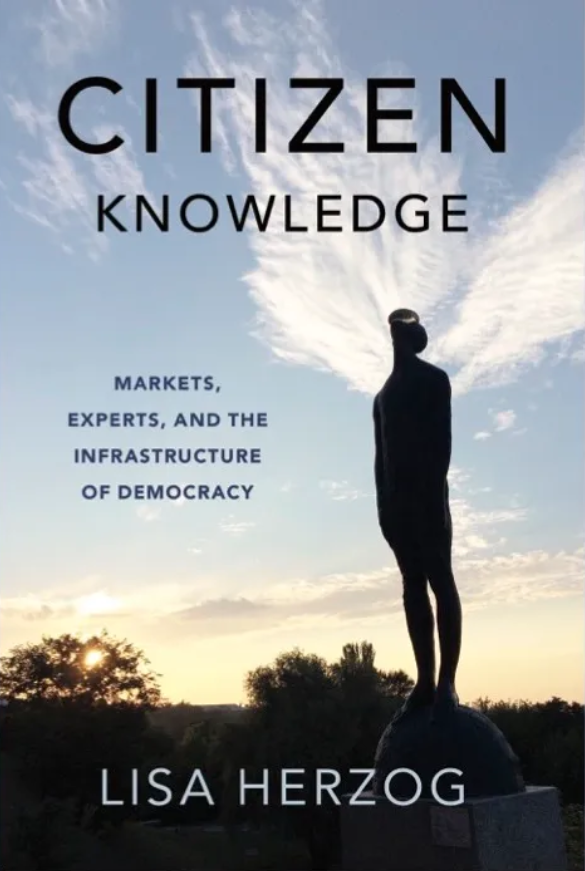
How do citizens learn about politics? How do new scientific insights make their way into politics?
Citizen Knowledge (Liza Herzog, OUP 2023) discusses how knowledge should be dealt with in today societies affected by the fraught relation between democracy and capitalism.
Emphasizing the responsibility of bearers of knowledge and the need to support institutions that promote active and informed citizenship, the book offers the vision of an egalitarian society that considers the use of knowledge in society not a matter of markets, but of shared democratic responsibility, supported by epistemic infrastructures.
|
|
|---|
|
|
|
Upcoming Colearning Events | April
–June 2024 |
|
March 29 @1
–3 p.m. (all times HAT).
Decolonizing Regional Knowledgescapes by Creating Digital Knowledge and Media Commons | Post-Digital Transformation Lab’s co-working session; lab’s team and invited guests. CPB Mall/Outdoor café area or a Tidepools conference room.
April 11 @12 p.m. (all times HAT)
Diagramming Sustainability Transition Processes | Technê Series LC: Visual Representations of Complex Forms of Knowledge. Advance Organizer Microlab.
Open to PKI and IMUA Labs’ current and future knowledge gardeners. Online format; registration required. Request pertinent details here.
April 8 @1–5 p.m. and April 12 @9 a.m.–12 p .m.
PKI’s Meet-and-Greet Hui at UHM’s College of Social Sciences | Open to all supporters and champions of knowledge democratization, science decolonization, and postformal education. RSVP here.
April 18 @12
–2:30 p.m.
Ecosophies of Arne Næss and Félix Guattari and the Integrative Potential of the Aloha ʻĀina Ideas | Metanoia Series LC: Designing the Ethos of Ecological Civilizations. Location and terms of participation TBC.
April 24 @4 p.m.
–6 p.m.
Protecting Climate Movement from Self-Sabotage by Pseudoactivism | Paidea Series LC (Critical Ecological Praxis Workshops). Location and registration details TBC in subsequent announcements.
April 26 @5
–7:00 p.m.
What’s Growing On? PKI’s meet-and-greet mixer @Kaka‘ako Waterfront Park (esplanade area). Open to current and future knowledge gardeners; RSVP here.
May 10 @3–4:30 p.m.
Co-Learning, Fast and Slow: Social and Institutional Epistemologies for the Era of The Great Unraveling | Paideia Series LC on Social Technologies. PKI’s core team and invited guests. Online format.
May 22 @12–1:30 p.m.
The Curse of Mechanical Arts | Event design charrette: August 2024 Critical University Studies Microforum. Open to members and supporters of the IWA Initiative (continued after 07/01/2024 as a Paideia Series LC: The Sleep of Reason in Academia and Beyond). Location and registration details TBC in subsequent announcements.
June 12 @12
–1:30 p.m.
The Semiotics of Othering in the Land of Aloha | Colloquium design charrette; Metanoia Series LC: The Semiotics of Solidarity). Request pertinent details here.
June 20 @6
–8 p.m.
Panta Rhei Hui: Marking the Arrival of Northern Solstice | PKI’s Open-Air Philosophy Events; Metanoia Series LC: Philosophy as Social Practice and a Way of Living. Details TBC.
Additional colearning and community-outreach event announcements may be added in the next Metascope issue. |
|
Do you prefer a virtual meet-and-greet? Visit the count-me-in web page [URL: join.imua.cc] to schedule a video chat or submit your questions, or send a subscribe-to-news-alerts request at imualabs@hawaii.edu. Because they are powered by volunteers, our programs and events repertoire may occasionally be affected by unforeseen schedule changes. We appreciate your understanding and patience in such situations. |
|
This publication and the new
Consilience Learning Series are co-produced by IMUA Labs* and the People’s Knowledge Institute (PKI), a critical social learning system and an experimental vehicle for integral, post-formal education, and transformational community research.
The central goal of our publications, knowledge-sharing streams and collaborative learning exercises is to cultivate civic intelligence, systemic literacy, and cognitive competences essential for living in a complex, dynamic world, and to elevate the community’s possession of truth, knowledge, and rational beliefs that support the ecological way of life. We iteratively develop and test innovative institutional-epistemology and knowledge-management know-how to improve the civic community’s learning capacity and self-awareness and to facilitate deeper intersectoral collaboration to respond to the grand challenges of green transformation.
As a collective intelligence initiative, we welcome a diversity of ideas and epistemic pluralism. Thus, the arguments expressed in our knowledge syntheses, bulletins, and event announcements do not necessarily reflect the views of IMUA Labs, PKI or the Hawai‘i Institute for Socio-Ecological Transformation (HISET). Should you spot a data error, a missing critical topic or issue, or an instance of faulty reasoning in our transdisciplinary publications, please submit your feedback to our knowledge gardeners and science communication specialists at
imualabs@hawaii.edu. |
|
|---|
|
*IMUA Labs @UH is a short name of the IMUA Scholarly Society for Epistemic Innovation, Integral Studies, and Transformational Research |
|
|---|
|
|
|