|
|
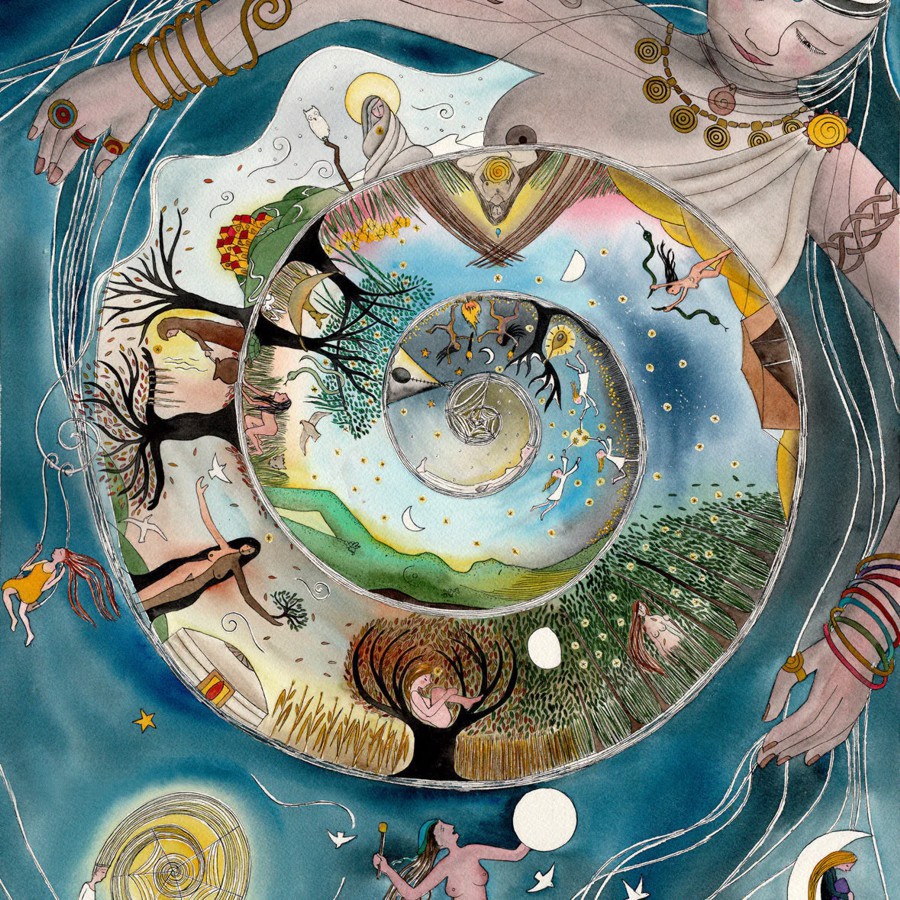
“We humans have no special rights, only obligations to the community of Gaia.”
|
|
|
“The Shaman” by Gaia Orion. Reproduced with the artist’s permission. |
|
|---|
|
The Club of Rome; A white paper by David Korten |
|
|---|
|
Humans confront an unprecedented challenge. Science tells us we now have less than a decade to address potentially irreversible damage to the Earth on which our wellbeing, indeed our existence, depends. This is an Emergency. Our home is burning, and we must act.
The required Emergency action depends on failed institutions, most of which are adapted relics of an imperial past that must give way to the Emergence of institutions that support us in fulfilling our distinctive human responsibility and potential. We must act now with what we have while initiating the transformational Emergence of the new.
It would be an impossible mission except for our proven human capacity to transform as we learn with ever increasing speed. We are a complex choice-making species with extraordinary physical and intellectual abilities. We have a deep longing to know ourselves, from whence we came, our possibilities, our fate beyond death, and the purpose of our being. We are also a highly social species with a deep need to connect with one another and nature.
Yet many among us have been lured into a self-destructive competitive quest to dominate and exploit one another and Earth in pursuit of individualistic material self-gratification unrelated to our true needs and nature. This misdirection is reinforced by corporate media’s veneration of the winners in a predatory and ultimately dehumanizing economy. The perversions have become so commonplace that we assume they are inherent in our nature. Yet, we know we are capable of so much more. And as we develop a deeper understanding of what gives us true satisfaction, we realize that creating the world we want requires that we give up only that which dehumanizes us and propels us toward self-extinction.
Hope lies in our extraordinary, distinctive, and increasingly self-aware capacity to envision and choose our common future. This is our time to rediscover and reclaim that which makes us truly human.
[Download the report]
.
|
|
|---|
|
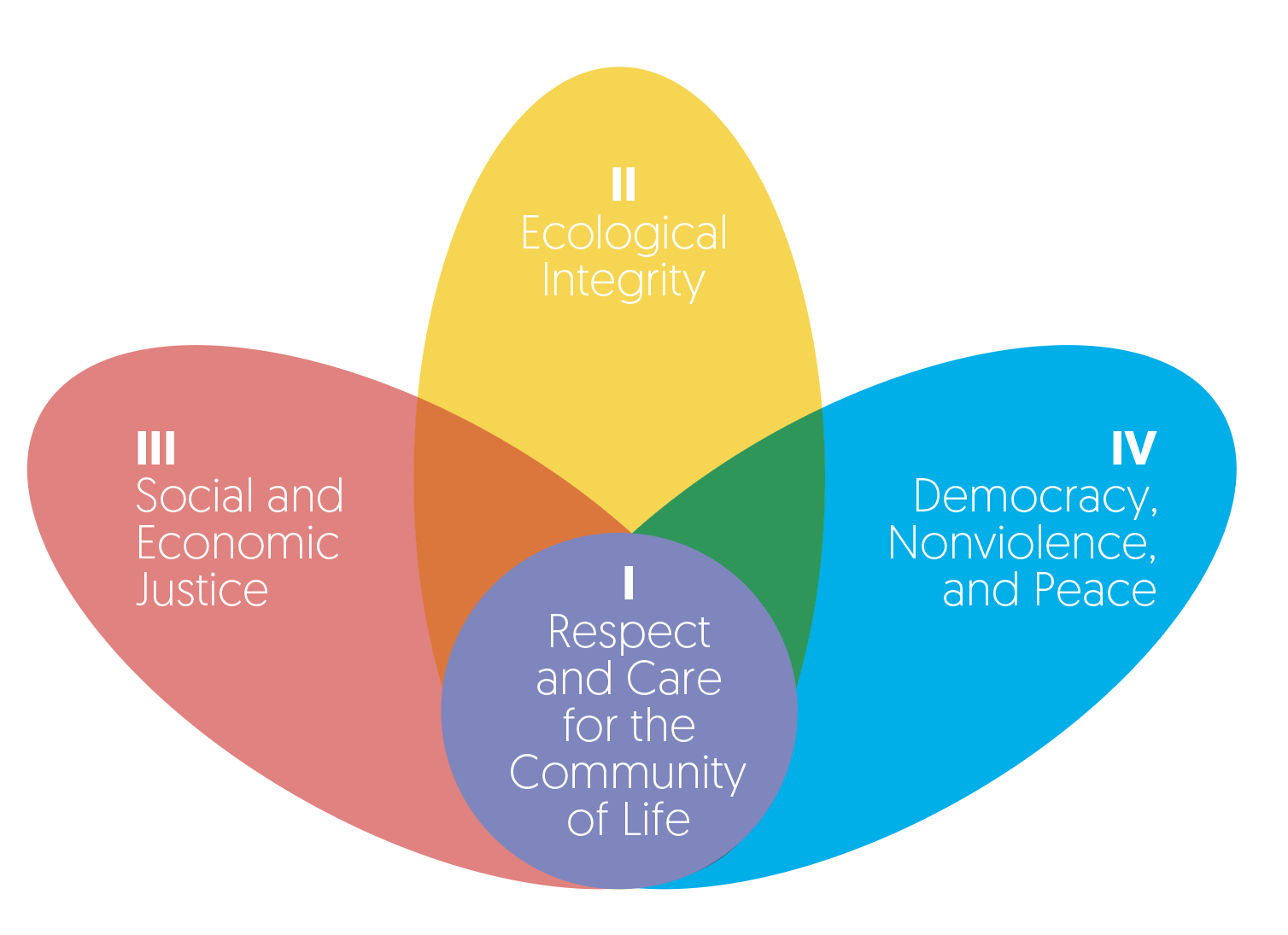
The Earth Charter (EC) is a document with sixteen principles that drive a global movement towards a more just, sustainable and peaceful world. The EC is a product of a decade-long, worldwide, cross-cultural dialogue on common goals and shared values. It presents a global human consensus on four elements of the future we seek together:
- Respect and care for the community of life
- Ecological integrity
- Social and economic justice
- Democracy, nonviolence, and peace
The EC articulates a mindset of global interdependence and shared responsibility. It offers a vision of hope and a call to action. It is an ethical foundation for decisions and an educational instrument; it is used as a reference and tool in the development of policies, planning, and in many other ways.
[Review or download the Earth Charter]
.
|
|
|---|
|
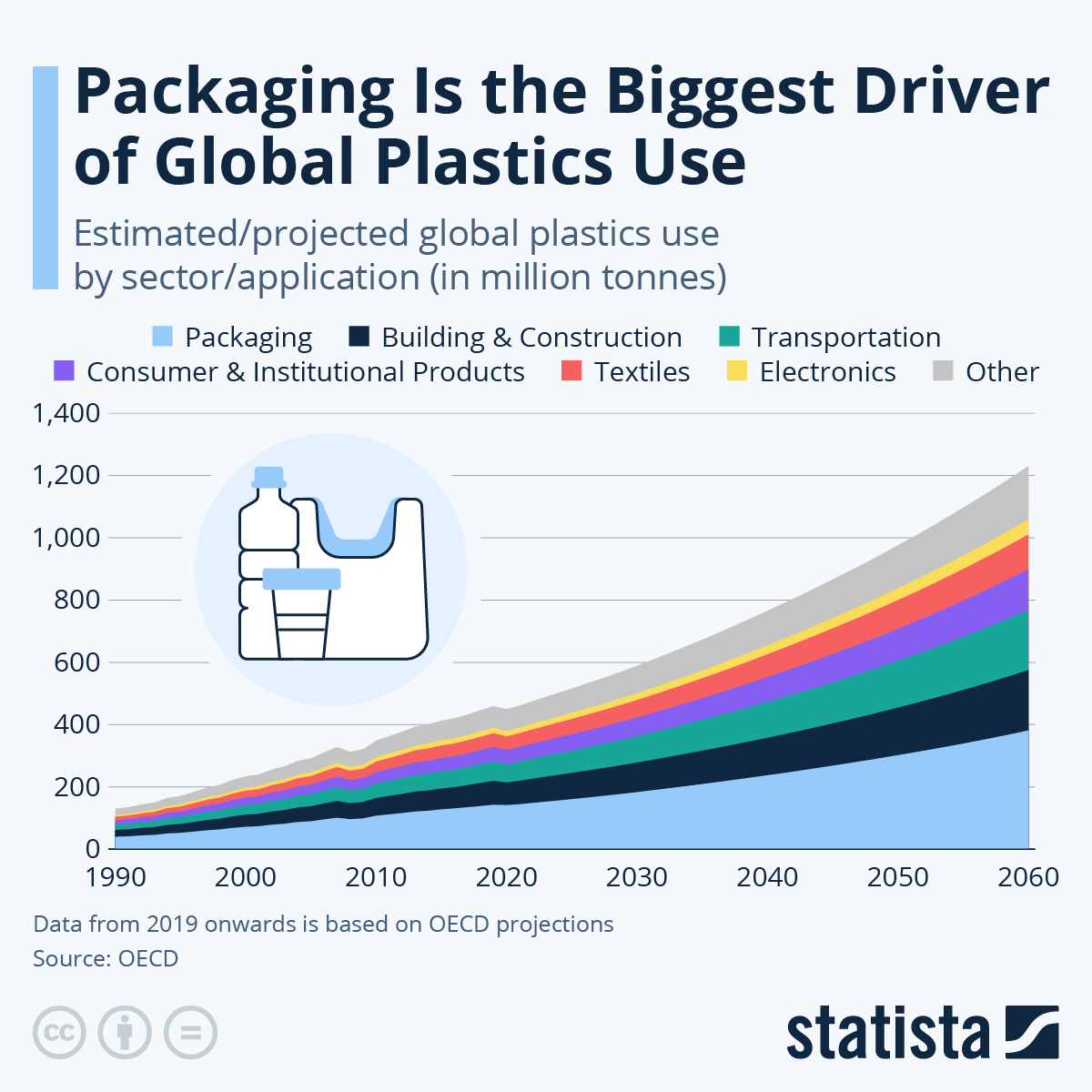
As the plastic pollution crisis grows in scale and urgency, consumer product and packaging companies are increasingly relying on so-called “bioplastics” to replace conventional fossil-fuel plastics. These bioplastics are made from many different types of ingredients, and it can be hard to keep up with all the developments. But we ignore them at our peril.
The most popular type of bioplastic made today is PLA, or polylactic acid, made from corn or sugarcane. Performing similarly to conventional plastics, PLA is commonly marketed as a compostable, plant-based material well suited for single-use products like cups, cutlery, and takeout containers. In the hospitality industry, where the use of single-use products is prevalent, the shift toward bioplastics is seen as a step toward sustainability. Yet this “green” alternative is not as environmentally friendly or healthy as it seems.
A new report from by the Plastic Pollution Coalition, and the environmental research group Eunomia takes a closer look at the production and disposal processes for PLA and reveals that these sustainability claims are often overstated and run the risk of contributing to greenwashing. In reality PLA is harmful to people and the planet in ways similar to conventional fossil-fuel plastics.
To solve plastic pollution, we need nontoxic, reusable materials — not more single-use disposable products.
[Read the report]
|
|
|---|
|
| |
This planetary boundaries framework update finds that six of the nine boundaries are transgressed, suggesting that Earth is now well outside of the safe operating space for humanity. Ocean acidification is close to being breached, while aerosol loading regionally exceeds the boundary. Stratospheric ozone levels have slightly recovered. The transgression level has increased for all boundaries earlier identified as overstepped.
As primary production drives Earth system biosphere functions, human appropriation of net primary production is proposed as a control variable for functional biosphere integrity. This boundary is also transgressed. Earth system modeling of different levels of the transgression of the climate and land system change boundaries illustrates that these anthropogenic impacts on Earth system must be considered in a systemic context.
.
.
|
|
|---|
|
|
|
Keywords and meta-markers: anthropogenic impacts; biosphere integrity; cumulative transgressions; irreversible changes; novel entities |
|
Source:
Richardson, K. et al. (2023).
Earth beyond six of nine planetary boundaries. Science Advances, 9(37).
https://www.science.org/doi/10.1126/sciadv.adh2458
.
.
.
|
|
|---|
|
|
|
|---|
|
| |
Evolutionary science has led to many practical applications of genetic evolution but few practical uses of cultural evolution. This is because the entire study of evolution was gene centric for most of the 20th century, relegating the study and application of human cultural change to other disciplines. The formal study of human cultural evolution began in the 1970s and has matured to the point of deriving practical applications.
Although much remains to be learned, researchers have identified three interacting factors that account for our exceptional capacity for cultural evolution: prosociality, social control, and symbolic thought. These same factors are highly relevant for practical applications. We provide an overview of these developments and examples for the topic areas of complex systems science and engineering, economics and business, mental health and well-being, and global change efforts.
.
.
|
|
|---|
|
|
|
Keywords and meta-markers: human cultural evolution; social control; prosociality; symbolic thought |
|
Source:
Sloan, D.S., Madhavan G., et al. (2023).
Multilevel cultural evolution: From new theory to practical applications. PNAS.
https://www.pnas.org/doi/10.1073/pnas.2218222120
.
.
.
.
.
.
. |
|
|---|
|
|
|
|---|
|
|
|
|
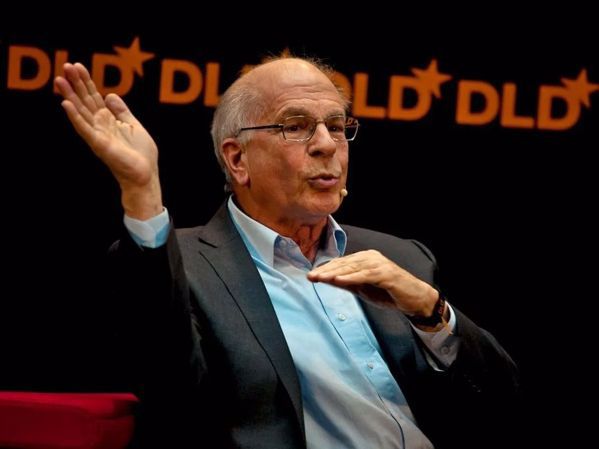
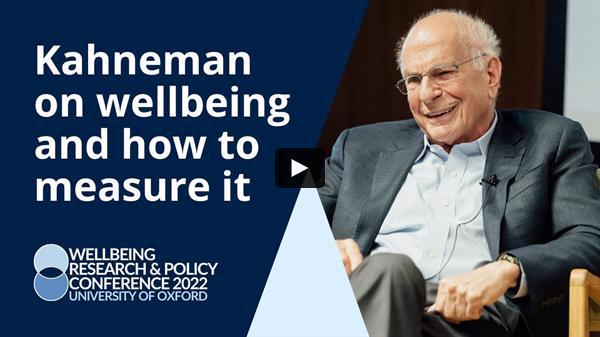
Daniel Kahneman (died March 27, 2024) was an Israeli-American psychologist and a corecipient of the Nobel Prize for Economics in 2002 for his integration of psychological research into economic science. His pioneering work examined human judgment and decision making under uncertainty. |
Daniel Kahneman obituary (The Guardian). |
|
|---|
|
|
|
|---|
|
|
|
—Daniel
Kahneman (1934 – 2024) |
|
| |
Since the beginning of business research and teaching, the basic assumptions of the discipline have been intensely debated. One of these basic assumptions concerns the behavioral aspects of human beings, which are traditionally represented in the construct of
homo economicus. These assumptions have been increasingly challenged in light of findings from social, ethnological, psychological, and ethical research. Some publications from an integrative perspective have suggested that homo economicus embodies to a high degree dark character traits, particularly related to the construct of psychopathy, representing individuals who are extremely self-centered and ruthless, without feelings of remorse or compassion.
While a growing body of research notes such a similarity on a more or less anecdotal basis, this article aims to explore this connection from a more rigorous perspective, bridging insights from psychological, economic, and business research to better understand the potentially dark traits of homo economicus. The analysis shows that homo economicus is not simply some kind of psychopath, but specifically a so-called subclinical or Factor 1 psychopath, who is also referred to as a “corporate psychopath” in business research. Based on these insights, several implications for academic research and teaching are discussed and reflected upon in light of an ethics of virtue and care.
.
.
|
|
|---|
|
|
|
Keywords and meta-markers: homo economicus; dark traits; psychopathy; unexamined beliefs |
|
Source:
Fuchs, F., & Lingnau, V. (2024).
The Homo Economicus as a Prototype of a Psychopath? A Conceptual Analysis and Implications for Business Research and Teaching. Journal of Business Ethics.
https://link.springer.com/article/10.1007/s10551-024-05638-7
.
.
.
.
.
.
.
.
.
.
.
\.
|
|
|---|
|
|
|
|---|
|
|
NB:
Metascope is not optimized for small-resolution screens and mobile devices, and it may not render equally well in all email clients and applications. For the best reading experience, we recommend viewing this publication in the web browser of your desktop computer, notebook, or tablet. Gmail and some other email clients may clip the displayed part of the publication. To enjoy the full issue, click on the “view entire message” link at the bottom of this message or select the “view this email in your browser” option at the top.
This curated collection contains 44 unique entries (textual, graphic and video materials), generally referenced by titles in bold font. It will be easier for you to access the full content of the issue by knowing this, even if your email program ends up clipping the displayed part of the publication. Note that we usually place event announcements and links for open-access book downloads toward the end of the publication. This is demo issue #3. To access previous issues, follow these links: issue #1 | issue #2 |
|
|---|
|
|
This paper assesses the performance of the Supreme Court as democratic guardrail during five prior periods of democratic crisis in the United States. It finds that most such periods witnessed efforts by the governing regime to entrench themselves in power, and that the Court has rarely provided an effective check on such democratic abuses. Rather than serving as a reliable democratic guardrail, the Court has regularly exercised what Dixon and Landau call “weak-form abusive judicial review”; that is, it has declined to check attacks on democracy emerging from other centers of power. On one occasion, the Court has undermined democracy even more directly via “strong-form abusive judicial review”; that is, the Court itself attacked key democratic guardrails.
This historical record provides a helpful baseline for evaluating the Court’s performance during the Trump era, when it has taken actions that both protect and undermine democratic health. Conflicting signs indicate that the Court is playing a more democracy-protective role than most of its predecessors in some respects, but a more democracy-undermining role in others. As such, it is too soon to say with confidence whether the contemporary Court will be remembered, on balance, for resolving or exacerbating a system-threatening constitutional crisis.
._
|
|
|---|
|
|
|
Keywords and meta-markers: U.S. Supreme Court; democratic backsliding; democratic erosion; election law; American political development; critical legal thinking |
|
Source:
Keck, T. M. (2024).
The U.S. Supreme Court and Democratic Backsliding. Law & Policy, forthcoming.
https://ssrn.com/abstract=4298415
.
.
.
.
.
.
.
.
.
.
.
.
.
.
.
.
. |
|
|---|
|
|
|
|---|
|
| |
Finding ourselves in the midst of a plural eco-social crisis, this paper addresses roles and guiding questions for action research understanding, envisioning, practicing, and organizing eco-social action, with the aim of renewing our human entanglements with the living ecologies, in which we are embedded. Driven by the aim of democratizing eco-social transformations, climate- and biodiversity disasters are approached as symptoms of a plural eco-social crisis. From an eco-feminist position, this crisis concerns notions of mastery and extractivism eroding human and societal capabilities to sustain the inherent regenerative capacities of the living.
Grounded in critical utopian action research, the paper addresses four different dimensions in action research for eco-social transformation: (i) enabling social learning spaces to make visible the ways we are socially and ecologically related; (ii) re-imagining how we want to live and relate in wider ecologies; (iii) seeking alternatives to mastery through tangible practices; and (iv) enabling new organizational forms for societal reorganization. Building on concrete cases from urban planning to rural and regenerative practice, this paper describes how these different perspectives can mutually strengthen action research for eco-social transformation.
_
|
|
|---|
|
|
|
Keywords and meta-markers: ecosocial transformation; social learning; critical utopian action research; plural crisis; eco-feminism; regenerative activities |
|
Source:
Egmose, J., et al. (2022).
Action research in the plural crisis of the living: understanding, envisioning, practicing, organising eco-social transformation. Educational Action Research, 30(4), 671–683.
https://www.tandfonline.com/doi/full/10.1080/09650792.2022.2084433
.
.
.
.
.
.
.
.
. |
|
|---|
|
|
|
|---|
|
| |
Recent studies show that many workers consider their jobs socially useless. Thus, several explanations for this phenomenon have been proposed. David Graeber’s ‘bullshit jobs theory’, for example, claims that some jobs are in fact objectively useless, and that these are found more often in certain occupations than in others. Quantitative research on Europe, however, finds little support for Graeber’s theory and claims that alienation may be better suited to explain why people consider their jobs socially useless.
This study extends previous analyses by drawing on a rich, under-utilized dataset and provides new evidence for the United States specifically. Contrary to previous studies, it thus finds robust support for Graeber’s theory on bullshit jobs. At the same time, it also confirms existing evidence on the effects of various other factors, including alienation. Work perceived as socially useless is therefore a multifaceted issue that must be addressed from different angles.
_
|
|
|---|
|
|
|
Keywords and meta-markers: job satisfaction; alienation; useless jobs; socially harmful occupations; meaningful work; management quality; public service motivation; hegemony of economic reasoning in policymaking |
|
Source:
Walo, S. (2023).
‘Bullshit’ After All? Why People Consider Their Jobs Socially Useless. Work, Employment and Society, 37(5), 1123-1146.
https://journals.sagepub.com/doi/10.1177/09500170231175771
.
.
.
. |
|
|---|
|
|
|
|---|
|
| |
The rise of stakeholder interest globally in sustainable business practices has resulted in a rise in demands from stakeholders that companies report on the environmental and social impacts of their business activities. In certain cases, however, companies have resorted to the practice of providing inaccurate disclosures regarding sustainability as part of their corporate communications and sustainability reporting—commonly referred to as “greenwashing”. Concurrently, technological improvements in artificial intelligence have presented the means to rapidly and accurately analyze large volumes of text-based information, such as that contained in sustainability reports.
Despite the possible impacts of artificial intelligence and machine learning on the fields of greenwashing and sustainability reporting, no literature to date has comprehensively and holistically addressed the interrelationship between these three important topics. This paper contributes to the body of knowledge by using bibliometric and thematic analyses to systematically analyze the interrelationship between those fields. The analysis is also used to conjecture a conceptual and thematic framework for the use of artificial intelligence with machine learning in relation to greenwashing and company sustainability reporting. This paper finds that the use of artificial intelligence in relation to greenwashing, and greenwashing within sustainability reporting, is an underexplored research field.
.
_
|
|
|---|
|
|
|
Keywords and meta-markers: greenwashing; sustainability reporting; artificial intelligence; machine learning; sustainability |
|
Source:
Moodaley, W., & Telukdarie, A. (2023).
Greenwashing, Sustainability Reporting, and Artificial Intelligence: A Systematic Literature Review. Sustainability, 15(2):1481.
https://www.mdpi.com/2071-1050/15/2/1481
.
.
.
.
.
.
.
.
.
.
.
.
.
.
.
.
.
.
.
|
|
|---|
|
|
|
|---|
|
| |
This paper examines the potential of the foundational economy as an industrial policy strategy for addressing the challenges posed by the socioecological transformation. The analysis sets out to deconstruct the jobs-versus-environment dilemma, revealing that dignified employment and climate mitigation are jointly imperiled by the capitalist mode of production. Nonetheless, ambitious environmental policies will necessitate structural economic changes and hence labor reallocations. In this context, the paper seeks to establish links between the foundational economy concept—which is primarily concerned with economic development and industrial policy—and sustainability research.
I contend that the foundational economy emerges as a promising avenue for addressing potential adverse effects of the socioecological transformation for two main reasons. First, it serves as a practical guide for necessary labor reallocations, proposing the absorption of workers into low-carbon, welfare-oriented sectors. Second, it functions as a discursive strategy that directly engages with workers’ self-perception and concerns, prioritizing community health and offering socially sustainable and meaningful employment. Despite these merits, the paper underscores the need for the foundational economy to address feminist critiques of labor and unpaid social reproduction to fully unlock its transformative potential. Additionally, the role of trade unions in supporting and shaping the foundational economy warrants further investigation, urging future research to delineate the positionality and strategies of trade unions in the consolidation of this economic approach.
.
_
|
|
|---|
|
|
|
Keywords and meta-markers: employment; foundational economy; industrial policy; social reproduction; socio-ecological transformation; trade unions |
|
Source:
Kuhls, S. (2024).
Overcoming the jobs–versus–environment dilemma: a feminist analysis of the foundational economy. Working Paper, No. 226/2024. Berlin School of Economics and Law.
https://www.ipe-berlin.org/en/publications/working-papers/
.
.
.
.
.
.
.
.
.
.
.
.
.
.
.
.
..
.
|
|
|---|
|
|
|
|---|
|
| |
The concept of the ‘shifting baseline syndrome’ has assisted researchers in understanding how expectations for the health of the environment deteriorate, despite known, often widespread, and significant impacts from human activities. The concept has been used to demonstrate that more accurate assessment of historical ecosystem decline can be achieved by balancing contemporary perceptions with other sorts of evidence, and is now widely referred to in studies assessing environmental change.
The potential of this concept as a model for examining and addressing complex and multidimensional social-ecological interactions, however, is underexplored and current approaches have limitations. We perceive the shifting baseline syndrome as a rare working example of a ‘connective concept’ that can work across fields of science, the humanities and others and that re-envisioning the concept in this way would assist us to establish more complete, true and reflective environmental baselines.
Through our diverse author team, from a range of disciplines, geographies and cultural backgrounds, we identify gaps in current knowledge of the shifting baseline syndrome concept, its use and its effects, and describe several approaches that could be taken to improve investigations and capitalise on the connectivity that it fosters. This re-envisioning could support a more informed and just way forward in addressing global environmental change.
.
_
|
|
|---|
|
|
|
Keywords and meta-markers: relational thinking; human-driven environmental change; observer bias; structural biases; limited imagination; perception of social-ecological change; decolonization; deep time |
|
Source:
Alleway, H. K., et al. (2023).
The shifting baseline syndrome as a connective concept for more informed and just responses to global environmental change. People and Nature, 5, 885–896.
https://doi.org/10.1002/pan3.10473
.
.
.
.
.
.
.
.
.
.
.
.
.
.
.
|
|
|---|
|
|
|
|---|
|
|
In this episode of the
Green Dreamer podcast, its host and producer, Kamea Chayne, is joined by theoretical physicist Chanda Prescod-Weinstein, whose research on small-scale particles points us to a large, cosmic picture. From particle physics and astrophysics to astronomy and Black feminist science studies, Chanda’s work spans a wide range of disciplines, practices, and texts.
Named as one of 10 people who helped shape science in 2020 as part of Nature’s 10, Chanda also leads in expanding awareness of and unpacking racism, sexism, and other forms of oppression that continue to govern scientific scholarship, particularly the field of physics. Through her deep love of math and physics as a form of storytelling, Chanda is committed, in her own words to “understanding the biggest story there is: the origin and history of the universe”—histories stemming from pluri-cultural lenses.
Tune in to this episode as Prescod-Weinstein talks through some of the themes explored in her latest award-winning book,
The Disordered Cosmos: A Journey into Dark Matter, Spacetime, and Dreams Deferred, pointing to the entanglement of Western scientific institutions tethered to specific cultural and historical hegemonies. Shining a light on the political nature of technology, she problematizes supremacist ways of knowledge-seeking and questions universalized visions of advancement—including the idea that expanding the accessibility of broadband internet connection to every community on Earth is a shared and necessary goal of inclusivity.
|
|
|---|
|
|
|
|
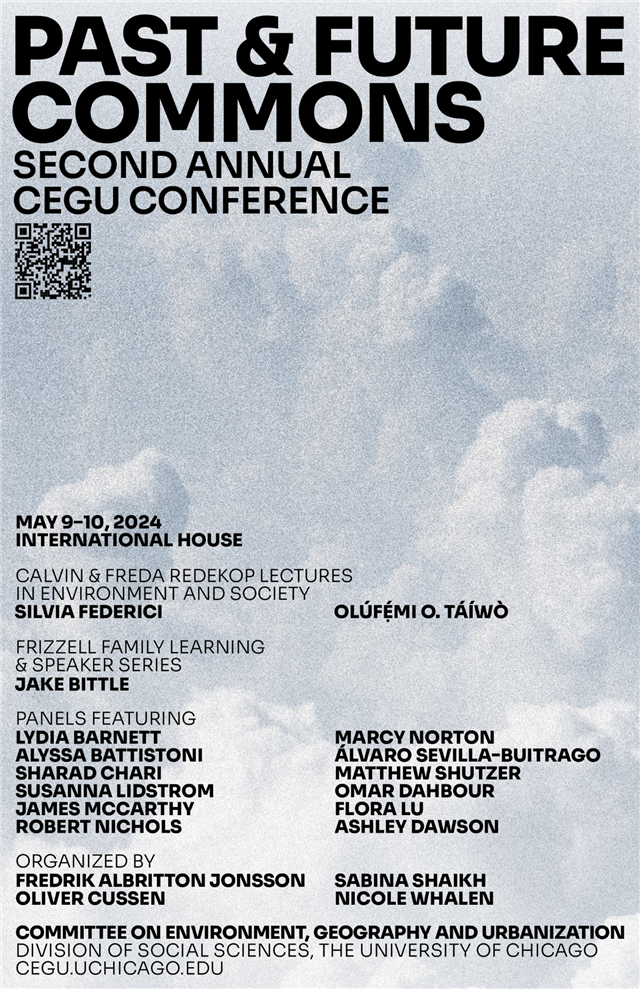
The twin emergencies of climate change and biodiversity loss have led to a revived interest in the past and future of “the commons”—in land that exists prior to or beyond private property, where social relations and natural resources are governed without the regulation of the state. To what extent do historical, existing, and imagined examples of the commons—from the precapitalist village, the urban commune, or the global commons—offer models for sustainable and democratic forms of political ecology? How might renewed attention to the commons allow us to reconsider the environmental consequences of previous and ongoing processes of enclosure and dispossession? The habitability of the planet depends on the fate of our planetary commons in the earth, atmosphere, and ocean. In pointing beyond the traditional institutions of the state and the market, the commons offer ways of rethinking the societal, spatial, and ethical dimensions of climate change, reorienting our understanding of the relationship between urban and rural, local and planetary, the global north and the global south, the human and the non-human.
. |
|
|---|
|
|
|
|---|
|
|
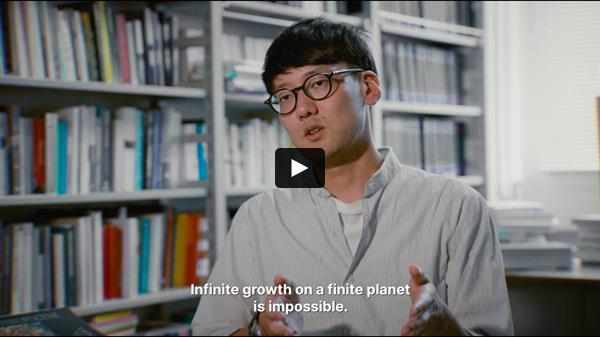
The following video clip is a brief introduction of the unique and groundbreaking work of Japanese philosopher Kohei Saito, who works on ecology and political economy. In his influential and highly acclaimed publications, Saito cogently argues for degrowth and deceleration in reversing climate change and saving our planet. In the next issues of Metascope, we’ll provide a closer introduction of this prolific thinker’s intellectual contributions. |
|
| |
At last: a UN Summit of the Future, to be held in September 2024. The summit promises a ‘global pact for the future’, but will it match the historic challenges that humanity is facing? It is glaringly evident that we need new perspectives on protecting the future against the pressures of the here and now. Many decisions made today are not just affecting the next century, but millennial or even geological time spans. How can we assure a sustainable ecological base for human development, and fairness in the conduct of world affairs? Science tells us that we cannot continue on the current, suicidal path. We cannot allow decision makers to inflict the impacts of unrelenting economic growth on a finite planet, putting economic freedoms first, with ethical perspectives as an afterthought. The 2024 UN Summit is putting the need to safeguard the future of people and planet on the global agenda as never before. It is up to the global NGO community to help assure that the agenda of the summit matches the huge challenges we are facing.
By Herbert Girardet (The Ecologist Special Series: Megamorphosis; August 1, 2023) |
|
|---|
|
 |
Consilience Learning Circles (formerly
Consilience Think Tank) is now a testing ground for our new learning and critical-thinking series being constructed at the intersection of philosophy, political science, heterodox economic theory, systemology, environmental thought, and traditional ecological knowledge, as well as utopian, cultural, and design studies. These open-ended series encourage a transdisciplinary dialogue on ends, ways, and means of deep green transformation of societies toward post-capitalist and post-liberal ecological civilization.
The series is intended to build the capacity for practical emancipatory interventions of active citizens in the fields of human activity locally and globally, in addition to cultivating a strong interpretive potential and serving as a hermeneutic and public-education platform outside neoliberal academia’s programmatic, ideological, and operational confines.
The 2024-2025 featured series are:
-
Metanoia (ongoing)
-
Oikonomia (soft launch scheduled for summer 2024)
-
Paideia (ongoing)
-
Phrónēsis (scheduled for winter 2024/2025)
-
Technê (scheduled for spring 2025)
The learning circles syllabi are iteratively designed and modified as our participatory action inquiry progresses. Retiring the “think tank” part of the original name of our transdisciplinary knowledge venture underscores our deepening commitment to genuine democratization of knowledge and decolonization of science, alongside our experimentation with innovative modes and forms of intersectoral, collaborative learning firmly rooted in robust civic values and social solidarity.
|
|
|---|
|
|
About Technê Series
Since its emergence in ancient Greek philosophy (Xenophon, Plato, Aristotle), the term “techne” (or “tekhne”), meaning art, craft, or skill, has seen several renegotiations and upgrades of the original meaning in accordance with ideas and thinking indicative of various periods of intellectual history (in, for instance, investigations of the scientific worldview and instrumental rationality by Heidegger, Husserl, and later in technology and technicity discourses by Lyotard, Foucault, Derrida, and Nancy).
For the purposes of our program of open inquiry and in line with the legacy of German phenomenological thinking, we consider techne a core dimension of both artistic and technological production. We intend to experiment with the former via
Poiesis, a critical learning vehicle seeking to leverage the generative potential of anthropoetics and constructive hermeneutics in the context of rethinking and re-storying the sapience of human species and interrogating the summum bona of conflicting social imaginaries up for inescapable adjudication and reconciliation vis-a-vis the nonnegotiable biogeophysical affordances of the planetary ecosystem.
As for technological applications informed by our understanding of techne, our interest lies in the cultivation of methodologies of transformation and benign ecotechnics as well as curriculum development (in a broad sense) for mastering the craftsmanship of making good decisions under the conditions of ever-increasing complexity and uncertainty. In other words, the aim of the R&D component of Technê Series is creating open-source social and intellectual technologies.
We named a corresponding set of introductory learning exercises “The Diagrammatology of Change and Process.” Mastering and applying the visual grammar of complex-knowledge representations is arguably the only effective way to engage with dynamic ontoepistemologies and axiologies of complex socio-technical-ecological systems while also curbing defective thinking associated with semantic traps and limiting language affordances (e.g., the fallacies of misplaced concreteness and perfect dictionary).
|
|
| |
With the meaning of colonization transformed to refer to shifting migration patterns (wrought by nothing other than the colonial structure of the global economy), changing gender norms and a homogenizing liberal culture, the far right can present themselves as champions of popular sovereignty and the self-determination of peoples. They can also stage an imaginary struggle against the ravages of transnational capital. To decolonize, for these thinkers, is to split off one kind of capitalism from another, a procedure well established within far-right thought. A globalist, rootless, parasitic, financial capitalism (imagined now as colonial) is separated from a racial, national, industrial capitalism (imagined as self-determining, or even decolonial). It goes without saying that such a separation is illusory: global systems of capital accumulation, with their entwined processes of immaterial speculation and earthly extraction, cannot be decoupled in this way.
By Miri Davidson (Sidecar/NLR, 4/4/2024) |
|
|---|
|
Today, democracy is understood in its shallow form: to many, it just means that the people can vote in elections for their government. But there is a deeper, more inspiring conception of democracy.
Deep democracy begins with a faith in the creative power of ordinary citizens — a presumption that all of us, not just a select few, can participate in the co-creation of our nation. From this faith comes the pursuit of a government and economy that are not only for all people, but of and by all people, as well. To be a deep democrat is to believe that when we open up power to more people in more ways — when people have a say in the forces that govern their lives — we flourish as a nation. It is to define freedom not as freedom from government (as libertarians define it), but rather as Martin Luther King Jr. defined it: as “participation in power.”
By Pete Davis (PeteDavis.org, NA) |
|
|---|
|
|
|
The escalation, diversification and broadening of the climate crisis is particularly concerning as fascism, in both its historical and contemporary forms, feeds off popular anxieties produced by crises. At the same time, it aligns itself with particular sections of capital to further its project. We can therefore expect to see the far right align itself with sections that will exacerbate the climate crisis, while also using the consequences of the crisis to stoke nationalist sentiments and further intensify border regimes.
As the crisis entrenches, some parts of the world will become increasingly inhospitable to human life, forcing people to move in large numbers. Here, climate struggles will increasingly intersect with the fight for a just transition for all – and against militarized borders, authoritarianism and an entrenchment of existing global systems of racial domination.
By Alex Roberts (Red Pepper, 3/24/2024) |
|
|---|
|
After the state passed a law barring government contractors from donating to politicians, fund-raising parties showed just how completely the reform effort failed.
In Hawaiʻi, legislators serve part time and can hold outside jobs, which can increase the risk that they will face conflicts of interest. Nevertheless, they are among the highest-paid part-time lawmakers in the country, earning an annual state salary of about $72,000.
An examination of their financial interests found that a dozen of them were employees, directors or co-owners of companies that had won contracts. Since 2006, those companies have gotten at least $56 million in state deals, according to Hawaiʻi’s contract database.
By Blaze Lovell, Eric Sagara and Irene Casado Sanchez (The New York Times, 4/17/2024) |
|
|---|
|
|
|
|---|
|
|
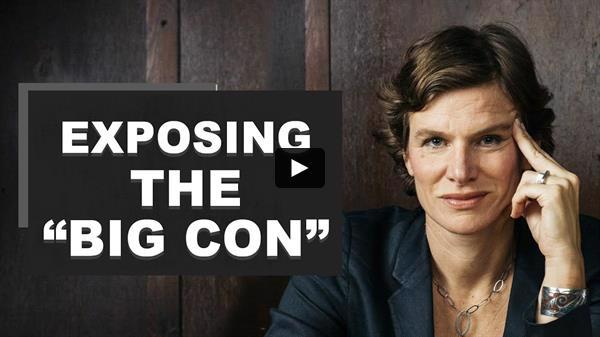
How the Consulting Industry Weakens our Economies and Harms Democracy
The following presentation shares the results of a groundbreaking investigation by economists Mariana Mazzucato and Rosie Collington into how the consulting industry has made its way to the heart of our economies, weakening businesses and infantilizing governments, stunting innovation, obfuscating corporate and political accountability, and impeding our collective mission of halting climate breakdown.
Professor Mariana Mazzucato is no ordinary economist. She is the author of three blockbuster books, winner of the Leontief Prize for Advancing the Frontiers of Economic Thought, and heralded as one of the “three most important thinkers about innovation” (New Republic), “one of the 50 most creative people in business” (Fast Company), and one of the “25 leaders shaping the future of capitalism” (WIRED), she has the ear of policymakers from the WHO to the UN and far beyond.
The “Big Con” is possible in today’s economies because of the unique power that consultancies wield through extensive contracts and networks – as advisors, legitimators and outsourcers – and the illusion that they are objective sources of expertise and capacity.
In conversation with former Editorial Director of BBC News, Kamal Ahmed, Mariana and Rosie will expertly debunk the myth that consultancies always add value to the economy. Presenting a wealth of original research, they will argue brilliantly for investment and collective intelligence within all organizations and communities, and for a new system in which public and private sectors work innovatively for the common good.
. |
|
|---|
|
|
We seek not to destroy capitalism, nor to reform it, but to transcend it – to consciously and rapidly evolve past it. We acknowledge its current hegemony, and accept that this arose as a result of its dynamism, adaptability, and ability to offer value to those who built it (while also recognizing its inherent violence towards the people and places which it so forcibly transformed). But the law of diminishing returns has set in, and the future negatives now dangerously and imminently outweigh the historic positives.
Many justifiable and insightful critiques of capitalism have been made, but what drives us now is a single, specific and urgent analysis: that the multiple crises facing humanity – crises which carry high existential risk – cannot be resolved under capitalism, or by any reformation of capitalism. That the social relations which have developed over the past two centuries under capitalism directly produce the civilization-threatening destruction which humans now inflict upon the carrying capacity of the biosphere.
[Full story]
By Dil Green (Mutual Credit Services, 3/14/2024) |
|
|---|
|
(The following letter was shared with us
by 350 Hawaiʻi)
I am Dr. Donn J. Viviani, Kailua Resident and President of the Climate Protection and Restoration Initiative. I write today as a Hawai’i taxpayer, a scientist, and most importantly, grandfather of eight keiki, two of whom live in Mānoa, concerning Navahine v. the Hawaiʻi Department of Transportation.
I was extremely proud when Hawai’i became the first state to declare a climate emergency. But I am now appalled that $2.25 million of state taxpayer money is budgeted for an outside law firm to resist the reasonable request of these keiki o ka ‘aina.
|
|
|---|
|
|
|
Faced with accelerating disruptions and social and environmental breakdowns, traditional forms of philanthropic giving may be less effective than they once were. Confronted with societal divisions, wars, and the climate crisis, core actors in philanthropy have begun to ask how philanthropy can respond more effectively in moments of a polycrisis. How can philanthropy deal with new forms of hypercomplexity? What is the role of philanthropy in responding to breakdown, and how can it promote regeneration and transformation?
By Otto Scharmer (Field of the Future Blog@Medium, 12/21/2023) |
|
|---|
|
Tens of thousands of people protested across the Canary Islands on April 20 to demand changes to the mass tourism model they say is overwhelming this Spanish archipelago.
Protesters say mass tourism perpetuates an economic model that harms local residents. They want authorities to temporarily limit tourist arrivals to curb a boom in short-term rentals and hotel construction that drives up housing costs for locals.
They are calling for restrictions on property purchases by foreigners. The protesters also want residents to have a greater say in what they see as uncontrolled development that is damaging the environment.
Last week, several members of the Canaries Sold Out collective also began an "indefinite" hunger strike against the construction of two large luxury developments in southern Tenerife.
By Nehal Johri (Deutsche Welle, 4/20/2024 |
|
|---|
|
|
|
|---|
|
|
When analysts model the climate and economy as an interconnected and dynamic system, what do they learn about climate solutions? And what are the modeling insights that build hope for the potential to avoid as much global warming as possible?
This interactive workshop will help participants explore the top surprising and hopeful insights emerging from En-ROADS, an integrated assessment model used by over 800,000 people in 125 countries and 20 languages.
Teams at Climate Interactive and MIT Sloan built En-ROADS using the system dynamics modeling method, which is particularly effective at discovering counterintuitive insights emerging from complex inter-relationships, feedback dynamics, and stock-flow dynamics.
To learn more, register for a free, interactive webinar on
April 25, 2024 @8 a.m. HAT
|
|
|---|
|
|
|
|
|
.
Your donations to this cause are tax-deductible
under section 501(c)(3) of the IRS code
Image credit: Freepik |
|
|---|
|
|
|
Essential Critical Questions (ECQ) are those that stimulate deep reflective thinking and critical inquiry. They can help focus our attention on issues vital for just and peaceful sustainability transitions, reveal our cognitive blindspots, frame our dispositions to settle controversies fairly, “straighten out” our reasoning when dealing with situations of uncertainty, and trigger generation of big ideas and creative approaches for tackling complex, intractable, and truly wicked problems. |
|
|---|
|
We just started generating OCI’s list of essential critical questions, and we invite intellectual input from members of Hawai‘i civil society, as well as fellow knowledge workers laboring in various institutional domains—scientists, physicans, journalists, librarians, educators, and other members of island intelligentsia. Please make your critical thought contribution to ideas@hawaii.edu.
The reader-submitted question selected for inclusion in the Earth Day issue of our bulletin is this: |
|
|---|
|
Who is profiting from the Green Capitalist Rush
to electrify our island lives and infrastructures?
|
|
|
It would be an oversimplification to believe that two observers sharing a common language as their existential domain share, by necessity, the same home in which they dwell as languaging (human) beings: for every observer the reality constructed in language depends on individual memories as complex dynamic systems of past perceptual experiences, including linguistic interactions. While being of a similar general architectural design, the “houses of being” of different observers may noticeably differ in what, how much, and in what detail they offer to the view of a particular observer.
If the difference between what two observers see from their respective homes grows out of proportion, a reality witnessed by one may not be the same reality as witnessed by the other, and there may be no “together-knowledge” and understanding as the basis for joint action. Therefore, if different observers wish to coordinate their interactional cooperative goal-directed behavior in their cognitive domain, the relational domain of language, they must be aware of the constraints imposed by language on such behavior, as well as of the affordances it offers.
.
|
|
|---|
|
|
|
Keywords and meta-markers: knower; declarative knowledge; procedural knowledge; languaging; coaction; together-knowledge; social epistemology; linguistic nature of human cognition; embodied-enacted-embedded approach in linguistics |
|
Source:
Kravchenko, A. V. (2024).
How Not to Make Things with Words: Constructivist Reflections on Knowledge, Language, and World. Social Epistemology Review and Reply Collective, 13(1), 11-1.
https://wp.me/p1Bfg0-8rq
.
.
.
.
.
. |
|
|---|
|
|
|
|---|
|
| |
My thesis in this paper is a fairly simple one, and one, I believe, that is fairly simple to support on rational grounds—although I imagine it will prove controversial among some dedicated to a philosophy of ‘scientific objectivism.’ But the thesis can be stated simply enough: A materialist interpretation of evolutionary theory cannot account for the subjective dimension of life and, in particular, cannot account for the desire for physical survival, which it presupposes. When we analyze evolutionary theory with care we discover, somewhat astonishingly, that it is actually inconsistent with a philosophy of metaphysical materialism. A full recognition of this undermines the claims of evolutionary materialists (such as Richard Dawkins and others) who have advanced and popularized the notion that the truth of evolutionary theory implies the falsity of religious belief.
_
|
|
|---|
|
|
|
Keywords and meta-markers: metaphysical materialism; evolutionary theory; intentionality and purpose; consciousness; rational spiritual faith |
|
Source:
Oxenberg, R. (2023).
Why Evolutionary Theory Contradicts Materialism? Essentia
Foundation
.
https://www.essentiafoundation.org/why-evolutionary-theory-contradicts-materialism/reading/
.
.
|
|
|---|
|
|
|
|---|
|
| |
In the following episode of the
Holding the Fire podcast, its host, Dahr Jamail talks with Dr. Lyla June Johnston and gains a far broader perspective on the polycrisis. Lyla June wonders why people are surprised that things have arrived at this point of collapse, given the inherent insatiability of the dominant system of extraction and growth, and the fact that Indigenous people have been issuing warnings for centuries. She also discusses rebirth, consequences of our actions, the creation of new paradigms, the Lakota view of selfishness as a mental illness, gardening our culture, healing, and ultimately, love.
Lyla June Johnston, of Navajo, Cheyenne, and European lineages, received her PhD from the University of Alaska Fairbanks’ Indigenous Studies Program, with a focus on Indigenous land stewardship. She also has a degree in environmental anthropology, with honors, from Stanford University, and a degree in American Indian education, with distinction, from the University of New Mexico. |
|
|---|
|
|
Increased interest in systemic design approaches and their impact on climate and societal crises make revisiting the theories of the commons and their applicability to system transitions a timely endeavour. By examining a case study of a marine protected area in the South African ocean, the paper explores how a commoning practice could be applied more intentionally in system design to increase cooperation amongst system actors and apply a multispecies – as opposed to human-centred – perspective to the management of natural, social, and immaterial resources.
By tracing the historical understandings of the commons, the study explores how Ostrom’s design principles could be applied as a set of heuristics to help system actors thrive in improved cohabitation. Thus, the paper draws on a working hypothesis of how economic and complexity theory could be integrated with systems thinking to create the conditions for increased stakeholder cooperation and alternative systems by design.
.
|
|
|---|
|
|
|
Keywords and meta-markers: commons; systemic design; beyond-human-centred design; complex systems |
|
Source:
Schaeper, J., et al. (2022).
Social commoning as a way to transition towards alternative systems by design, in Lockton, D., Lenzi, S., Hekkert, P., Oak, A., Sádaba, J., Lloyd, P. (eds.), DRS2022: Bilbao, Spain.
https://doi.org/10.21606/drs.2022.511
.
.
.
.
. |
|
|---|
|
|
|
|---|
|
| |
|
|
|
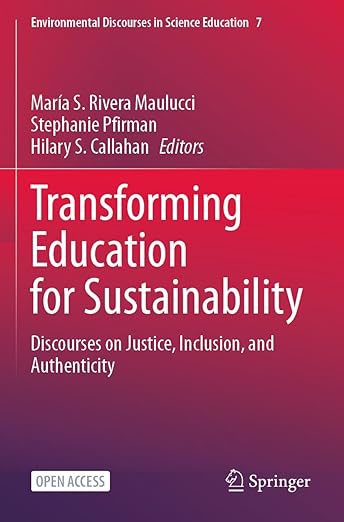
This book investigates how educators and researchers in the sciences, social sciences, and the arts, connect concepts of sustainability to work in their fields of study and in the classrooms where they teach the next generation. Sustainability, with a focus on justice, authenticity and inclusivity, can be integrated into many different courses or disciplines even if it is beyond their historical focus. The narratives describe sustainability education in the classroom, the laboratory, and the field and how the authors navigate the complexities of particular sustainability issues, such as climate change, water quality, soil health, biodiversity, resource use, and education in authentic ways that convey their complexity, the sociopolitical context, and their hopes for the future.
|
|
|---|
|
|
|
The chapters explore how faculty engage students in learning about sustainability and the ways in which working at the edge of what we know about sustainability can be a significant source of engagement, motivation, and challenge. The authors discuss how they create learning experiences that foster democratic practices in which students are not just following protocols, but have a stake in creative decision-making, collecting and analysing data, and posing authentic questions. They also describe what happens when students are not just passively receiving information, but actively analysing, debating, dialoguing, arguing from evidence, and constructing nuanced understandings of complex socio-scientific sustainability issues. The narratives include undergraduate student perspectives on what it means to engage in sustainability research and learning, how students navigate the complexities and contradictions inherent in sustainability issues, what makes for authentic, empowering learning experiences, and how students are encouraged to persevere in the field.
|
|
Upcoming Colearning Events | April
–June 2024 |
|
April 24 @4 p.m.
–6 p.m.*
Protecting Climate Movement from Self-Sabotage by Pseudoactivism | Paidea Series LC: Critical Ecological Praxis Workshops.
May 1 @10:00 a.m.
–2:00 p.m.
PKI’s Meet-and-Greet Conversations @UHM Campus. Additional details to be provided in direct email invitations, before the end of April.
May 10 @3–4:30 p.m.
Co-Learning, Fast and Slow: Social and Institutional Epistemologies for the Era of The Great Unraveling | Paideia Series LC: Social Technologies.
May 16 @12–1:30 p.m.
Three-Tier Ontologies of Glocal Wicked Problems | Tekhne Series LC: The Diagrammatology of Change and Process.
May 22 @12–1:30 p.m.
The Curse of Mechanical Arts | Event design charrette: August 2024 Critical University Studies Microforum. Open to members and supporters of the IWA Initiative (continued after 07/01/2024 as a Paideia Series LC: The Sleep of Reason in Academia and Beyond).
June 12 @12
–1:30 p.m.
The Semiotics of Othering in the Land of Aloha | Colloquium design charrette; Metanoia Series LC: The Semiotics of Solidarity.
June 20 @6
–8 p.m.
Panta Rhei Hui: Marking the Arrival of Northern Solstice | PKI’s Open-Air Philosophy Events; Metanoia Series LC: Philosophy as Social Practice and a Way of Living.
June 27 @3
–4:30 p.m.
On Epistemic Authority, Expertocracy, and the Popular Notion of
Real Science in Hawaiʻi | Paideia Series LC: Knowledge Decommodification and Science Decolonization.
July 11 @12–1:30 p.m.
Remedy, Poison, or Scapegoat? Understanding Hawaiʻi’s Relationship with Tourism through the Concept of Pharmakon | Metanoia Series LC: Is the Thing a Thing? |
|
*All times are HAT. Additional colearning and community-outreach event announcements may be added in the next Metascope. Note that we’ve made schedule changes for several events announced in the previous issue. To request event participation details, contact us at think@hawaii.edu. |
|
Do you prefer a virtual meet-and-greet? Visit the
count-me-in web page [URL: join.imua.cc] to schedule a video chat or submit your questions, or send a subscribe-to-news-alerts request at imualabs@hawaii.edu. Because they are powered by volunteers, our programs and events repertoire may occasionally be affected by unforeseen schedule changes. We appreciate your understanding and patience in such situations. |
|
This publication and the new
Consilience Learning Series are co-produced by IMUA Labs* and the People’s Knowledge Institute (PKI), a critical social learning system and an experimental vehicle for integral, post-formal education, and transformational community research.
The central goal of our publications, knowledge-sharing streams and collaborative learning exercises is to cultivate civic intelligence, systemic literacy, and cognitive competences essential for living in a complex, dynamic world, and to elevate the community’s possession of truth, knowledge, and rational beliefs that support the ecological way of life. We iteratively develop and test innovative institutional-epistemology and knowledge-management know-how to improve the civic community’s learning capacity and self-awareness and to facilitate deeper intersectoral collaboration to respond to the grand challenges of green transformation.
As a collective intelligence initiative, we welcome a diversity of ideas and epistemic pluralism. Thus, the arguments expressed in our knowledge syntheses, bulletins, and event announcements do not necessarily reflect the views of IMUA Labs, PKI or the Hawai‘i Institute for Socio-Ecological Transformation (HISET). Should you spot a data error, a missing critical topic or issue, or an instance of faulty reasoning in our transdisciplinary publications, please submit your feedback to our knowledge gardeners and science communication specialists at
imualabs@hawaii.edu. |
|
|---|
|
*IMUA Labs @UH is a short name of the IMUA Scholarly Society for Epistemic Innovation, Integral Studies, and Transformational Research |
|
|---|
|
|
|