|
|
“You may be able to fool the voters, but not the atmosphere .”
|
|
|
By Robert Monroe (Scripps Institution of Oceanography, UC San Diego; May 8, 2024) |
|
|---|
|
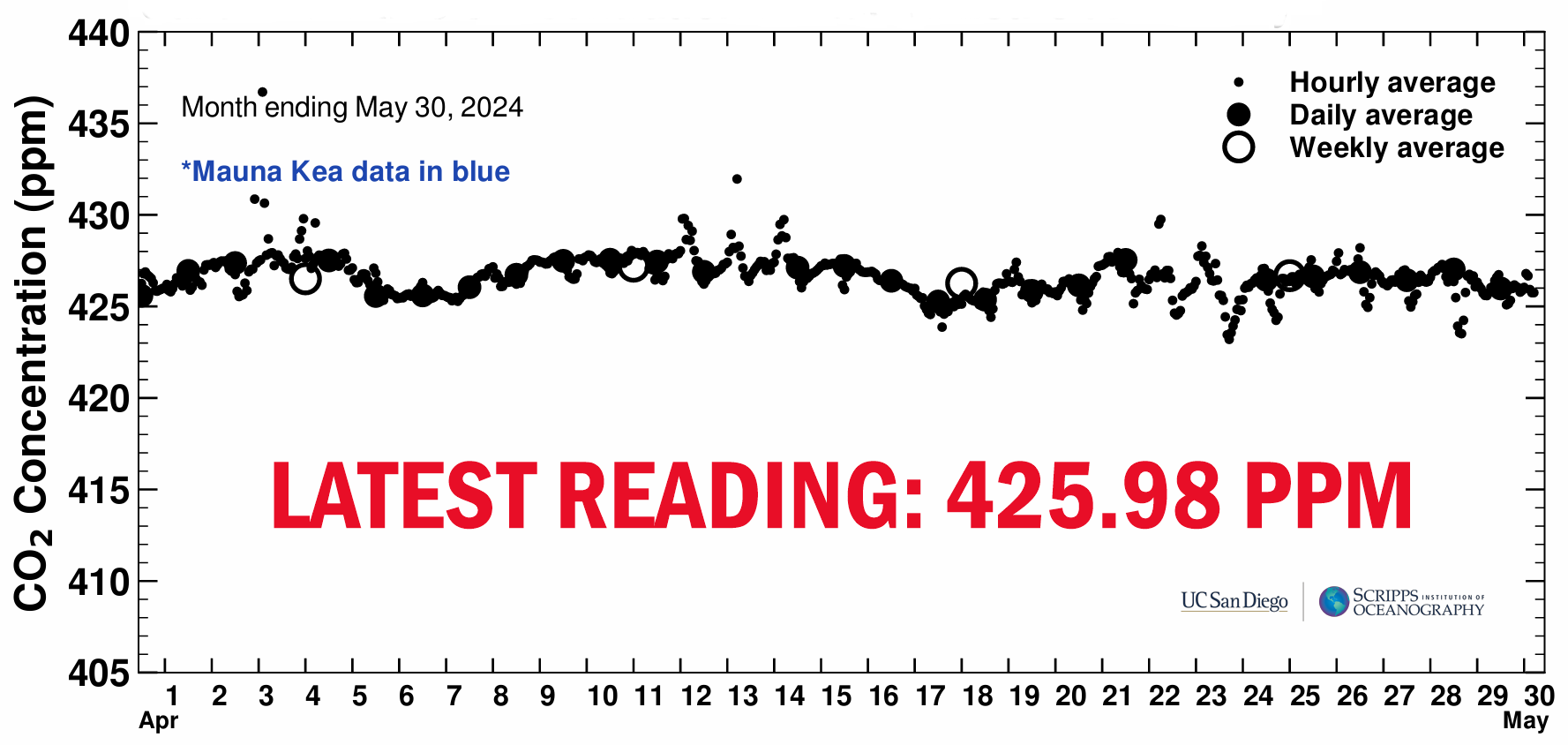
The Keeling Curve is the record of atmospheric CO2 from the NOAA’s Mauna Loa Observatory, starting in 1958. The monthly average concentration of carbon dioxide in the atmosphere measured in March 2024 was 4.7 parts per million (ppm) higher than that recorded in March 2023, setting a new record and revealing the increasing pace of CO2 addition to the atmosphere by human activities.
“We sadly continue to break records in the CO2 rise rate,” said Ralph Keeling, director of the CO2 Program at UC San Diego’s Scripps Institution of Oceanography. “The ultimate reason is continued global growth in the consumption of fossil fuels.”
[Learn more]
.
|
|
|---|
|
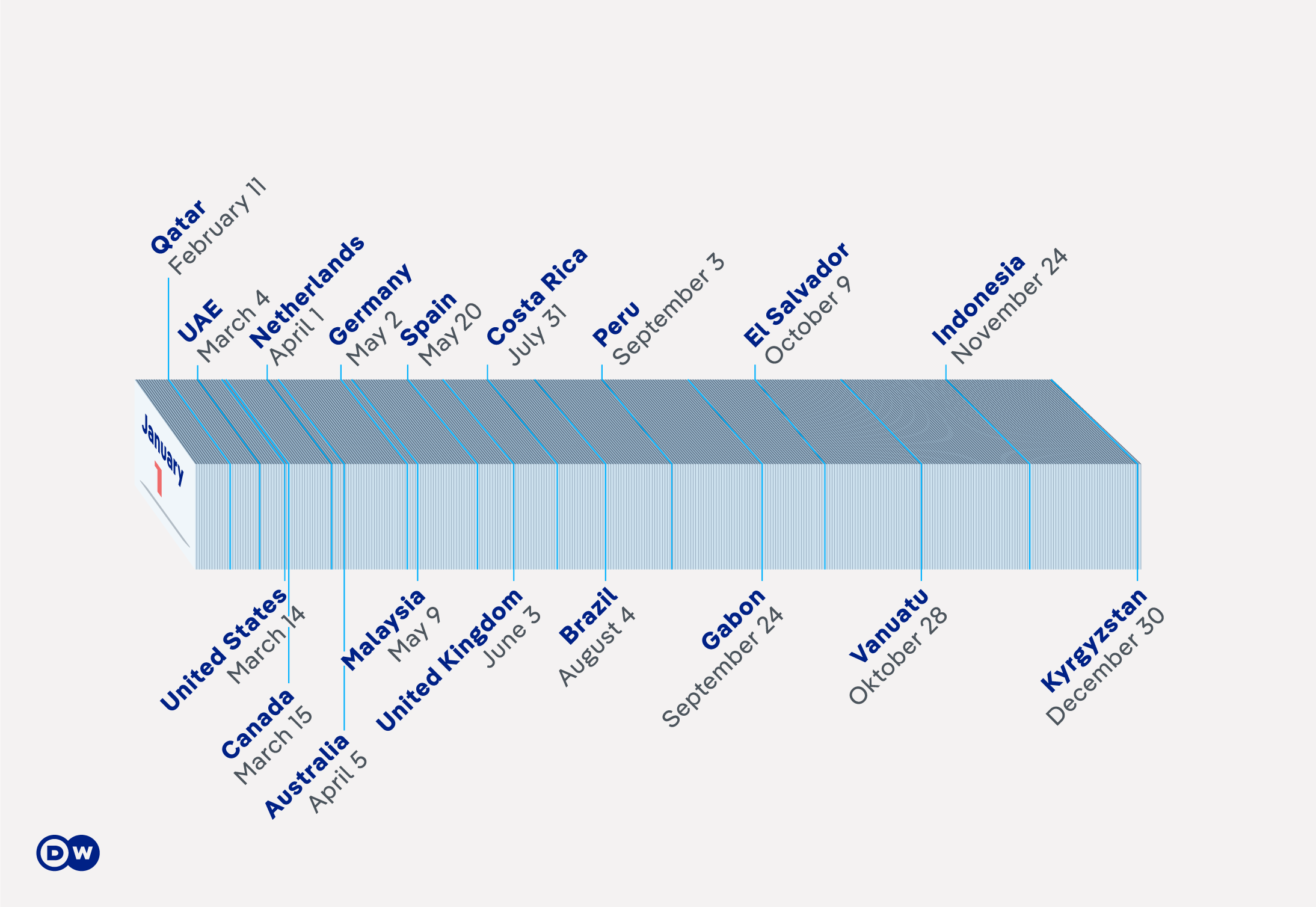
The Date of US Ecological Overshoot in 2024: March 14 |
|
|---|
|
Ecological overshoot occurs when a population’s demand on an ecosystem exceeds the capacity of that ecosystem to regenerate the resources it consumes and absorb its wastes. In other words, ecological overshoot happens when humanity’s demand for ecological resources and services outstrips what the planet’s ecosystems can provide and renew on a sustainable basis.
|
|
|---|
|
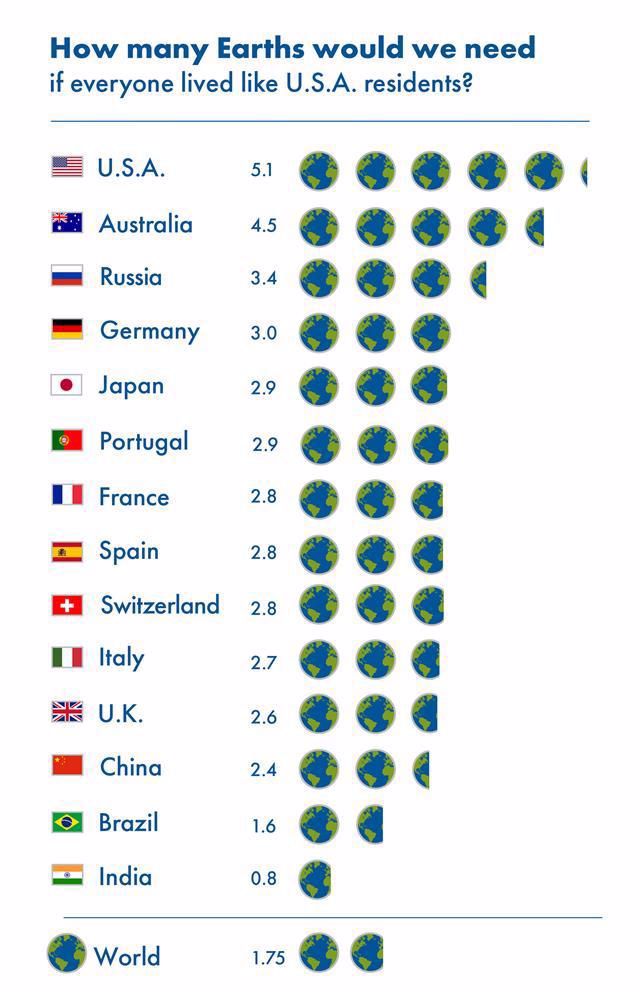
Source: National Footprint and Biocapacity Accounts
https://overshootday.org/how-many-earths |
|
|---|
|
|
By John Bellamy Foster (Monthly Review, 4/1/2024) |
|
|---|
|
Over the last decade and a half, the concept of extractivism has emerged as a key element in our understanding of the planetary ecological crisis. Although the development of extractive industries on a global scale has been integral to the capitalist mode of production since its onset, commencing with the colonial expansion of the long sixteenth century, this took on a much larger worldwide significance with the advent of the Industrial Revolution of the late eighteenth and nineteenth centuries, marking the beginning of the age of fossil capital. Nevertheless, it was only with the Great Acceleration, beginning in the mid-twentieth century and extending to the present, that the
quantitative expansion of global production and of resource extraction in particular led to a
qualitative transformation in the human relation to the Earth System as a whole.
[Read the article]
.
|
|
|---|
|
| |
The Anthropocene is characterized by accelerating change and global challenges of increasing complexity. Inspired by what some have called a polycrisis, we explore whether the human trajectory of increasing complexity and influence on the Earth system could become a form of trap for humanity. Based on an adaptation of the evolutionary traps concept to a global human context, we present results from a participatory mapping. We identify 14 traps and categorize them as either global, technology or structural traps. An assessment reveals that 12 traps (86%) could be in an advanced phase of trapping with high risk of hard-to-reverse lock-ins and growing risks of negative impacts on human well-being. Ten traps (71%) currently see growing trends in their indicators. Revealing the systemic nature of the polycrisis, we assess that Anthropocene traps often interact reinforcingly (45% of pairwise interactions), and rarely in a dampening fashion (3%). We end by discussing capacities that will be important for navigating these systemic challenges in pursuit of global sustainability. Doing so, we introduce evolvability as a unifying concept for such research between the sustainability and evolutionary sciences.
.
.
|
|
|---|
|
|
|
Keywords and meta-markers: polycrisis; increasing complexity; socio-ecological systems; evolutionary transitions; innovation loops; technology traps; structural traps; standards of living; foresight; institutional reorganization; conflict navigation |
|
Source:
Søgaard Jørgensen, P., et al. (2024).
Evolution of the polycrisis: Anthropocene traps that challenge global sustainability. Philosophical Transactions of the Royal Society B; 37920220261.
https://royalsocietypublishing.org/doi/10.1098/rstb.2022.0261
.
.
.
.
.
.
.
.
.
..
..... |
|
|---|
|
|
|
|---|
|
| |
The metabolism of contemporary industrialized societies, that is their energy and material flows, leads to the overconsumption and waste of natural resources, two factors often disregarded in the global ecological equation. In this discussion article, we examine the amount of natural resources that is increasingly being consumed and wasted by humanity, and propose solutions to reverse this pattern. Since the beginning of the 20th century, societies, especially from industrialized countries, have been wasting resources in different ways. On one hand, the metabolism of industrial societies relies on non-renewable resources. On the other hand, yearly, we directly waste or mismanage around 78% of the total water withdrawn, 49% of the food produced, 31% of the energy produced, 85% of ores and 26% of non-metallic minerals extracted, respectively. As a consequence, natural resources are getting depleted and ecosystems polluted, leading to irreversible environmental changes, biological loss and social conflicts.
To reduce the anthropogenic footprint in the planet, and live in harmony with other species and ourselves, we suggest to shift the current economic model based on infinite growth and reduce inequality between and within countries, following a degrowth strategy in industrialized countries. Public education to reduce superfluous consumption is also necessary. In addition, we propose a set of technological strategies to improve the management of natural resources towards circular economies that, like ecosystems, rely only upon renewable resources.
.
.
|
|
|---|
|
|
|
Keywords and meta-markers: mismanagement of natural resources; social metabolism; overconsumption; waste; environmental justice; sustainability; degrowth |
|
Source:
Marín-Beltrán, I., et al. (2022).
Scientists’ Warning against the Society of Waste. Science of the Total Environment, 811, 151359.
https://www.sciencedirect.com/science/article/pii/S0048969721064378
.
.
.
.
.
.
.
.
.
.
.
.
.
.
|
|
|---|
|
|
|
|---|
|
| |
Global projections of macroeconomic climate-change damages typically consider impacts from average annual and national temperatures over long time horizons. Here we use recent empirical findings from more than 1,600 regions worldwide over the past 40 years to project sub-national damages from temperature and precipitation, including daily variability and extremes. Using an empirical approach that provides a robust lower bound on the persistence of impacts on economic growth, we find that the world economy is committed to an income reduction of 19% within the next 26 years independent of future emission choices (relative to a baseline without climate impacts, likely range of 11–29% accounting for physical climate and empirical uncertainty).
These damages already outweigh the mitigation costs required to limit global warming to 2 °C by sixfold over this near-term time frame and thereafter diverge strongly dependent on emission choices. Committed damages arise predominantly through changes in average temperature, but accounting for further climatic components raises estimates by approximately 50% and leads to stronger regional heterogeneity. Committed losses are projected for all regions except those at very high latitudes, at which reductions in temperature variability bring benefits. The largest losses are committed at lower latitudes in regions with lower cumulative historical emissions and lower present-day income.
.
.
|
|
|---|
|
|
|
Keywords and meta-markers: macroeconomic forecasts; emission mitigation costs; committed economic damages from climate change; climate justice; adaptive decision-making; socio-economic inertia; ethics in economic modelling |
|
Source:
Kotz, M., Levermann, A., & Wenz, L. (2024).
The economic commitment of climate change. Nature 628, 551–557.
https://www.nature.com/articles/s41586-024-07219-0
.
.
.
.
.
.
.
.
.
.
.
.
.
.
.
.
|
|
|---|
|
|
|
|---|
|
|
NB:
Metascope is not optimized for small-resolution screens and mobile devices, and it may not render equally well in all email clients and applications. For the best reading experience, we recommend viewing this publication in the web browser of your desktop computer, notebook, or tablet. Gmail and some other email clients may clip the displayed part of the publication. To enjoy the full issue, click on the “view entire message” link at the bottom of this message or select the “view this email in your browser” option at the top.
This month’s
Metascope contains 52 unique entries, generally referenced by titles in bold font. It will be easier for you to access the full content of the issue by knowing this, even if your email program ends up clipping the displayed part of the publication. Note that we usually place event announcements and links for open-access book downloads toward the end of the publication. This is demo issue #4. To access previous issues, follow these links: issue #1 | issue #2 | issue #3 |
|
|---|
|
| |
The concurrent pressures of rising global temperatures, rates and incidence of species decline, and emergence of infectious diseases represent an unprecedented planetary crisis. Intergovernmental reports have drawn focus to the escalating climate and biodiversity crises and the connections between them, but interactions among all three pressures have been largely overlooked. Non-linearities and dampening and reinforcing interactions among pressures make considering interconnections essential to anticipating planetary challenges.
In this review, we define and exemplify the causal pathways that link the three global pressures of climate change, biodiversity loss, and infectious disease. A literature assessment and case studies show that the mechanisms between certain pairs of pressures are better understood than others and that the full triad of interactions is rarely considered. Although challenges to evaluating these interactions—including a mismatch in scales, data availability, and methods—are substantial, current approaches would benefit from expanding scientific cultures to embrace interdisciplinarity and from integrating animal, human, and environmental perspectives. Considering the full suite of connections would be transformative for planetary health by identifying potential for co-benefits and mutually beneficial scenarios, and highlighting where a narrow focus on solutions to one pressure might aggravate another.
._
|
|
|---|
|
|
|
Keywords and meta-markers: climate-induced changes; ecological networks; chains of interactions; evolutionary adaptations; global extinctions; carbon footprint of health care; complex non-linear dynamical systems; multiscale modelling; siloed research cultures; transformative change |
|
Source:
Pfenning-Butterworth, A., et al. (2024).
Interconnecting global threats: climate change, biodiversity loss, and infectious diseases. The Lancet Planetary Health, 8(4), e270–e283.
https://doi.org/10.1016/S2542-5196(24)00021-4
.
.
.
.
.
.
.
.
.
.
.
.
.
.
.
.
. |
|
|---|
|
|
|
|---|
|
| |
This article is the first to reconstruct the intellectual history of Milton Friedman’s criticism of business and its social responsibilities. Using original archival research and printed evidence, this article makes three major arguments. First, Friedman’s criticisms of business and its social responsibilities evolved over time and emerged from persistent anxieties among economic liberals about monopoly, business interests, and political authority that were explicitly read from Adam Smith. Second, the article contributes to the emerging intellectual history of corporate social responsibility (CSR) by reconstructing the development of Friedman’s criticisms, their transformations, and their reception within the context of American managerial thought from the 1950s to the 1980s. Finally, contextualizing Friedman’s criticisms demonstrates his concern about decision-making logics within organizations, which in turn explains his belief that CSR would contribute to collectivization and enhances the understanding of neoliberal political thought.
.
.
|
|
|---|
|
|
|
Keywords and meta-markers: decision-making logics; neoliberal political thought; moral and political assumptions in CSR; the entanglement of business interests with political power; American management thought |
|
Source:
Smith, D. C. (2024).
The Intellectual History of Milton Friedman’s Criticism of Corporate Social Responsibility. Modern Intellectual History, 1–27.
doi:10.1017/S1479244324000027
.
.
.
.
.
.
.
.
.
.
. |
|
|---|
|
|
|
|---|
|
| |
The paper deploys the disclosive computer ethics (DCE) approach to reconstruct the ethics and politics of one of the sharing economy’s flagships—Airbnb. I investigate Airbnb’s technical design to identify the moral and political values that are embedded in the platform’s technology. I then analyze the platform’s ethics and politics towards a generalization of relevant ethical and political aspects by reconnecting them to the mechanisms, operations, rationales, and ideologies of the sharing economy in general.
The paper contributes to the existing literature by linking between the ethics and politics of digital platforms and their technical design, using the case study of Airbnb. Additionally, it explores Airbnb as a specific platform technology with unique ethical and political values. Thus, the paper refutes the neutrality thesis and similar claims made by sharing economy platforms. Finally, the paper makes a methodological contribution to the literature on the ethics and politics of technology. It develops a practical DCE research methodology for uncovering the values, ethics, and politics of digital technologies.
.
_
|
|
|---|
|
|
|
Keywords and meta-markers: sharing economy; platform economy; digital technology; disclosive ethics; the morality and politics of technology; Airbnb |
|
Source:
Spier, S. (2024).
Uncovering Digital Platforms’ Ethics and Politics: The Case of Airbnb. Philosophy and Technology, 37(2), 1–27.
https://link.springer.com/article/10.1007/s13347-024-00742-y
.
.
.
.
.
.
.
.
.
.
.
.
.
.
. |
|
|---|
|
|
|
|---|
|
|
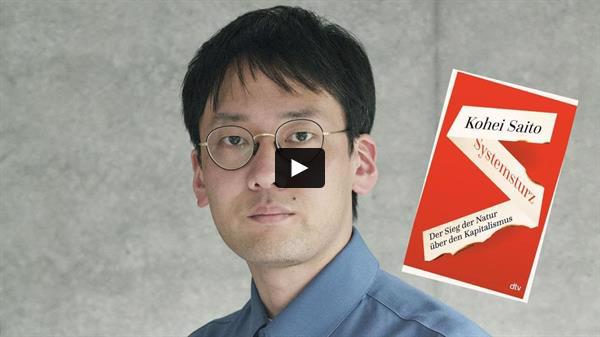
In his book
Capital in the Anthropocene (2023), Japanese philosopher and historian of economic thought Kohei Saito analyzes the links among capital, ecology, and society in the Anthropocene. He argues that the inherent growth imperative of capitalism has created the root problems of today’s man-made, capital-driven climate crisis. Saito suggests shorter working hours and the prioritization of essential production as part of decarbonization. He calls the United Nations’ SDGs a new “opium for the masses” and proposes the communization of big oil, major banks, and digital infrastructure. |
|
|---|
|
|
Over the past two decades, hundreds of different commons around the world have arisen and developed working ties with peers, creating what might be called the
Commonsverse. To elected officials, legislatures, bureaucracies, courts, and business people, the commons continues to be seen as a failed management regime, one that implicitly needs state or market intervention and control. As the essays of this special issue suggest, however, many projects and activists are seeing commons as a powerful, versatile force for change.
The piecemeal efforts to build a Commonsverse amounts to a quest to build a parallel polis. Commoning honors wholesome values and different ways of being, knowing, and acting while allowing ordinary people to assert some measure of self-determination in the face of capitalist markets and state power. This essay explores a broad range of contemporary commons activities, the “ontological politics” they are engendering, and the challenges they face in expanding and institutionalizing commoning. Future development should focus on the potential of commons/public partnerships, new infrastructures to make commoning easier, legal hacks to open up zones of commoning, the potential of relationalized finance, and new institutional structures of care.
_
|
|
|---|
|
|
|
Keywords and meta-markers: Ostrom; political economy; Internet; liberalism; bureaucracy; public administration; free market economics; open source software; governance; cooperation; Barcelona; urban commons; Commonsverse; vernacular practice; custom; communing; capitalism; value; relationality; ontology symbiosi; commons/public partnerships; legal hacks; rights of nature relationalized finance; care |
|
Source:
Bollier, D. (2024).
Challenges in Expanding the Commonsverse. International Journal of the Commons, 18(1), 288–301.
https://doi.org/10.5334/ijc.1389
.
.
.. |
|
|---|
|
|
|
|---|
|
| |
Decoupling has been and continues to be a discourse used to prolong business as usual growth strategies without confronting systemic and behavioural changes. While decoupling narratives have emerged in the past in the form of its close siblings such as the Environmental Kuznets Curve, green economy, eco-efficiency, eco-innovation, and more recently, the circular economy; scholars, especially from the ecological economics community, continue to systematically challenge decoupling both empirically and theoretically. Many meta-studies have concluded that absolute resource, energy, and emissions decoupling, when internalising for trade and consumption in tandem, results in futile. Therefore, institutionalising decoupling for future policy prolongs the misconception of a persistent myth, propagating a deceitful narrative failing to tackle the urgency of the climate crisis.
In this chapter, several recent publications and developments are discussed and synthesised from a unique insight with contributions from the Barcelona school of Ecological Economics and Political Ecology. In conclusion, the chapter presents a case for the rejection of decoupling environmental degradation from economic growth and calls for just, inclusive, and biophysically grounded transformative futures.
.
_
|
|
|---|
|
|
|
Keywords and meta-markers: decoupling concepts; transformative futures; alternative imaginaries; post/degrowth narratives; collective wellbeing; lifestyle change; absolute reduction targets; sufficiency-oriented strategies; narrative changes; systemic transformation |
|
Source:
Sorman, A.H. (2023).
Deceitful Decoupling: Misconceptions of a Persistent Myth. In: Villamayor-Tomas, S., Muradian, R. (eds) The Barcelona School of Ecological Economics and Political Ecology. Studies in Ecological Economics, vol 8. Springer, Cham.
https://doi.org/10.1007/978-3-031-22566-6_15
.
.
.
.
.
.
|
|
|---|
|
|
|
|---|
|
| |
Starting from a comparison between the Belep Islands (Kanaky New Caledonia) and Oʻahu (Hawaiʻi), this paper aims to contribute to the debates about islands and the Anthropocene, highlighting the relevance of the social and ecological responsibilities deriving from genealogical connections to the islands: ʻthe weight of the ancestors’.
Considering the implications of these kinds of responsibilities can help to understand human an non-human relational entanglements better so as to value the agentive role of other-than-human perspectives.
.
_
|
|
|---|
|
|
|
Keywords and meta-markers: Anthropocene; ecological indigenous knowledge systems; intergenerational transmission; islands; Oceania |
|
Source:
Borgnino, E., & Giordana, L. (2023).
The Disregarded Weight of the Ancestors: Honouring the Complexities and Cultural Subtleties of Islandscape. Island Studies Journal, 18(1), 122–142.
https://islandstudiesjournal.org/article/81128
.
.
.
.
.
|
|
|---|
|
|
|
|---|
|
| |
This chapter traces the origin of racism and reviews the historical and contemporary debates around race and racialisation in western thought. There are persistent disagreements surrounding the origin and nature of racism. Because of the evolution of racist ideas, behaviours and institutional practices and policies, there are various views about the meaning and analytical application of racism. This chapter explores how ideas of race – understood as innate and immutable human differences that can be classified and ranked hierarchically based on race – has emerged in western history and evolved over time. It examines how this has influenced social and political practices and associated policies across the evolution of modernity.
The chapter specifically discusses the Atlantic slave trade and how it shaped the historical development of race and racism within the context of colonialism. It concludes with a discussion and critical review of some of the racist systems and policies which have been enforced across different multiracial countries.
.
_
|
|
|---|
|
|
|
Keywords and meta-markers: racism; raciarchy; slavery; segregation; history; Atlantic slave trade; antisemitism |
|
Source:
Elias, A. (2024).
“Brief History of Racism”, Racism and Anti-Racism Today, Emerald Publishing Limited, Leeds, pp. 29-56.
https://doi.org/10.1108/978-1-83753-512-520241002
.
.
.
.
.
.
.
.
|
|
|---|
|
|
|
|---|
|
|
Ambient Sovereignty and the Question of Temperature Control
In this episode of the
Green Dreamer podcast, its host and producer, Kamea Chayne, is joined by Hiʻilei Julia Kawehipuaakahaopulani Hobart, who is Assistant Professor of Native and Indigenous Studies at Yale University. An interdisciplinary scholar, she researches and teaches on issues of settler colonialism, environment, and Indigenous sovereignty. Her first book,
Cooling the Tropics: Ice, Indigeneity, and Hawaiian Refreshment is a recipient of the press’s Scholars of Color First Book Award.
“When it comes to refrigeration, so many of us have just come to accept that that’s how things are done. But I think in the food sovereignty conversation, those dependencies can sometimes be overlooked when we’re talking about what it means to become sovereign.”
|
|
|---|
|
Some of the topics explored in this conversation include the symbolism of ice and shaved ice in Hawaiʻi, the establishment of the cold chain as an integral part of the global food system, provocations about the anthropocentric desire to control ambient temperatures, and more.
[Listen to the conversation]
|
|
|
|---|
|
|
| | |
Judging the effectiveness of any action or policy addressing climate change relies upon the concept of a “baseline”. It is ubiquitous in the domains of greenhouse gas (GHG) mitigation policy and emissions reductions crediting. Unfortunately, though, the word is often thrown out too casually by the non-expert, as if a baseline is an easily referenced single object. However, GHG professionals properly understand that baselines have multiple components that must be distinguished to avoid confusion and mistakes. Clarity in distinguishing these components is critical when you advise policymakers and other decision-makers on the emission reduction impacts of their actions.
By Michael Gillenwater (GHG Management Institute; March 14, 2022) |
|
|---|
|
The Inflation Reduction Act, Bipartisan Infrastructure Law, and the CHIPS and Science Act mark a shift in the nation’s approach to combating climate change. These recent legislative strides demonstrate the bipartisan potential of green industrial policy that prioritizes investments in climate-relevant infrastructure. However, there’s growing concern about these bills’ emphasis on private sector involvement — the likely outcome being further concentration of power and wealth in the private sector.
New polling conducted by Data for Progress reveals that 76% percent of voters would approve of a new clean energy or infrastructure project being developed in their area if it were publicly owned. This includes strong majorities of Democrats (86%), Independents (75%), and Republicans (65%). What’s more, when asked about the future of infrastructure development projects in their community, a majority (69%) of voters agree with a statement saying that projects should be mostly publicly owned going forward, giving communities a meaningful say and stake in projects that may affect them. In contrast, just 22% of voters agree with the statement that says projects should largely be privately owned moving forward.
By Catherine Fraser, Celina Scott-Buechler, Anika Dandekar, and Grace Adcox (Data for Progress; May 9, 2024) |
|
|---|
|
The character of a future egalitarian society, and the most viable way to get there, have been contested by two environmentalist camps: degrowthers and eco-modernists. The first argues that capitalism’s drive for perpetual expansion is the cause of planetary breakdown, and demands a slower, “steady-state” alternative based on less production and consumption. The second claims that this expansionism has created the technological preconditions for a sustainable society, which the working class must now bring to full fruition, rather than aiming for any aggregate contraction. It remains to be seen whether these positions can be reconciled.
By Oliver Eagleton (The Ideas Letter; May 16, 2024) |
|
|---|
|
Why Public Restrooms Are a Fundamental Human Right |
|
|---|
|
The availability of public restrooms in the US only rivals that of Botswana – around 8 toilets for every 100,000 people. What does it really mean to say restrooms are a fundamental human right? Put simply, it means that all people deserve access to a clean, accessible, and reliable place to “go”.
The International Covenant on Economic, Social, and Cultural Rights (ICESCR) recognizes “the right of everyone to an adequate standard of living for himself and his family.” It goes on to say that countries need to “take appropriate steps to ensure the realization of this right.” The US signed the document along with nearly every other country in the world.
The public restroom as a basic human right is further outlined in the United Nations’ Sustainable Development Goals. SDG 6 focuses on “clean water and sanitation for all.” The stated goal is to meet this standard by 2030. [Learn more...]
|
|
|
|
|
Gentrification changes the way a neighbourhood looks, feels and sounds. Usually when people talk of gentrification they are speaking of the city, and the many ways gentrification occurs in inner-city neighbourhoods. Often, these are multicultural locations, and places that have experienced disinvestment, loss of employment and a downturn in living standards.
On the surface, gentrification can seem like a positive step as more money flows into an area and the quality of housing stock improves. But subsequently, rising accommodation costs change the community’s makeup, as being able to buy or rent property inevitably moves beyond the reach of lower-income residents.
By Joy White (Red Pepper, February 10, 2023) |
|
|---|
|
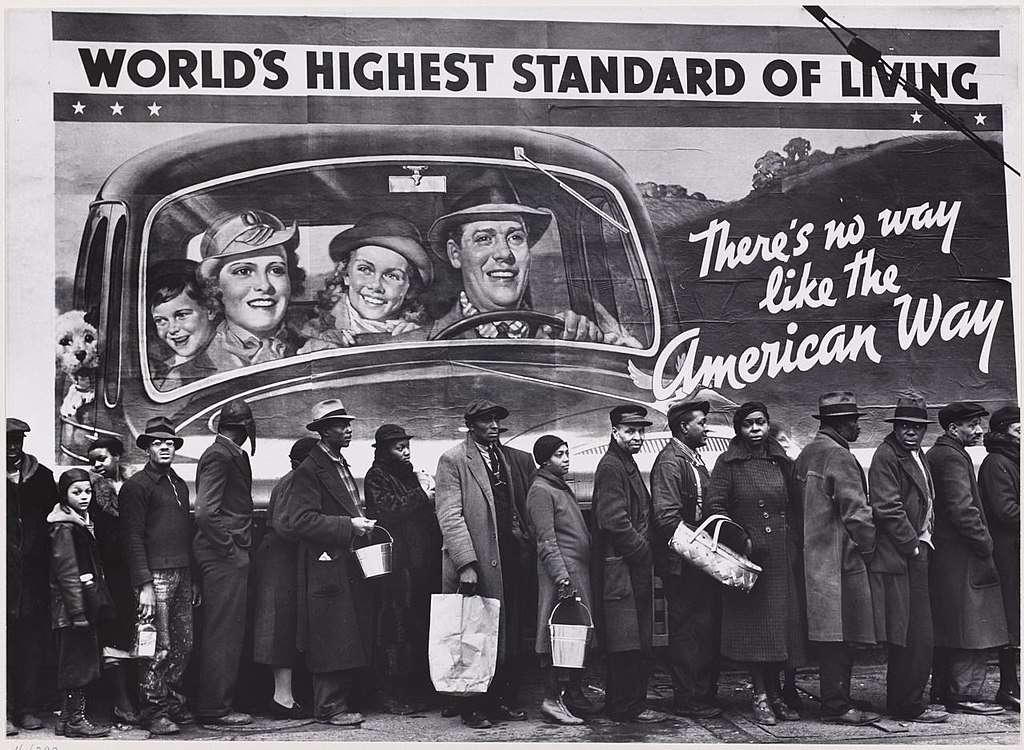
1937 photograph entitled
World’s Highest Standard of Living, also known as
At the Time of the Louisville Flood, by Margaret Bourke-White. (Wikimedia Commons) |
|
|---|
|
|
 |
Consilience Learning Circles (formerly
Consilience Think Tank) is now a testing ground for our new action-learning, higher-order thinking and critical-reasoning series being constructed at the intersection of philosophy, political science, heterodox economic theory, systemology, environmental thought, and traditional ecological knowledge, as well as utopian, cultural, and design studies. These open-ended series encourage a transdisciplinary dialogue on ends, ways, and means of deep green transformation of societies toward post-capitalist and post-liberal ecological civilization.
The series is intended to build the capacity for practical emancipatory interventions of active citizens in the fields of human activity locally and globally, in addition to cultivating a strong interpretive potential and serving as a hermeneutic and public-education platform outside neoliberal academia’s programmatic, ideological, and operational confines.
The 2024-2025 featured series are:
-
Metanoia (ongoing)
-
Oikonomia (soft launch scheduled for summer 2024)
-
Paideia (ongoing)
-
Phrónēsis (scheduled for winter 2024/2025)
-
Technê (scheduled for spring 2025)
The learning circles syllabi are iteratively designed and modified as our participatory action inquiry progresses. Retiring the “think tank” part of the original name of our transdisciplinary knowledge venture underscores our deepening commitment to genuine democratization of knowledge and decolonization of science, alongside our experimentation with innovative modes and forms of intersectoral, collaborative learning firmly rooted in robust civic values and social solidarity.
|
|
|---|
|
|
|
Starting June 15, we are resuming our in-person Open-Door Editorial Confabs, enhanced by knowledge sharing via our daily online
Vitamin K channel on Discord. To join the channel (currently run in a test mode), send a four-word email or text message—
subscribe to Vitamin K—to imualabs@hawaii.edu or 808-657-3555. |
|
|
On March 8 it was reported that at least five residents of Gaza were killed by the airdrops of humanitarian aid at the Al-Shati camp, west of Gaza City. Less than two weeks ago, Zein Oroq, a thirteen-year-old boy who survived an airstrike on his family home in November, was struck by airdropped food items. He succumbed to his wounds in hospital on April 14. A fragile bridge to apparent salvation proved to be deadly. From the standpoint of the victims, does it matter whether death delivered from the air came in the shape of bombs or aid packages? In fact, this was more than a tragic incident, paling in significance compared to the staggering numbers of civilians killed in the Israeli bombardments of Gaza over the past months. Deaths by humanitarian airdrops are a clue to the broader logic of events unfolding today, especially in Gaza but also in other parts of the world.
By Michael Marder (The Philosophical Salon, 4/22/2024) |
|
|---|
|
Japan has gone through a gradual process of dismantling its self-imposed ban on exporting lethal weapons, a process that reached a new plateau with last month’s decision to permit the export to third countries of the next-generation fighter aircraft to be developed jointly with the United Kingdom and Italy.
When this policy change is read in conjunction with the U.S.-Japan Joint Leaders’ Statement issued on April 10, 2024, it is likely that Japan has agreed to jointly develop and produce missiles with the United States and export them to third countries. (It also marks the latest development in its departure from its pacifist defense policy that dates back to the immediate post-World War II era.) This article tries to explain the background and implications of Japan’s policy changes.
By Kiyoshi Sugawa (Responsible Statecraft, 4/11/2024) |
|
|---|
|
The High Court’s decision to permit Julian Assange to appeal his pending extradition is an important, if partial, victory. The judges are aware that, in reality, he has no case to answer. The US charge of ‘espionage’ is blatant nonsense. The fact that it hasn’t already been dismissed and Julian released is a sign of the UK’s generalized subordination to American interests.
By Tariq Ali (Sidecar/NLR, 5/20/2024) |
|
|---|
|
A total of 1,153 executions took place in 2023, which does not include the thousands believed to have been carried out in China, marking an increase of more than 30% from 2022. It was the highest figure recorded by Amnesty International since 2015, when 1,634 people were known to have been executed.
By Amnesty International, 5/29/2024 |
|
|---|
|
|
|
How is it that modernity – since the Enlightenment – has not consigned war and terrorism to the barbaric past? In his book
Ethical Violence (Polity Press, 2023), Italian sociologist Carlo Bordoni develops a complex picture of modernity – or rather modernities, in seeing a series of sociological and economic upheavals over recent centuries. These included the creation of state sovereignty, the rise of reason and science, industrialisation and the proliferation of technology. To these we must add the crises of modernity in recent decades, with its values of progress, human equality and rationality being questioned.
In the wake of the pandemic, we are witnessing the growing prevalence of aggression and emotionality in social and political life. We find ourselves living in an increasingly impatient and insecure society, which is sceptical of scientific thought and which takes refuge in the irrational. The decline of rationality and the growing prevalence of violence are increasingly common features of a society that has lost touch with the great Enlightenment narrative. We need, argues Bordoni, to rediscover the rationality we have lost and recuperate the positive side of technology.
By Hugh Breakey, (The Conversation, 1/20/2024) |
|
|---|
|
The Palestinians’ resistance to Israel’s ongoing genocidal attacks has energized the largest mass antiwar movement in years, drawing out organizers among different communities and campaigns. In Los Angeles Chinatown, tenant leaders and organizers have been mobilizing to connect their immediate campaigns against gentrification and displacement to solidarity with Palestine against Israeli settler colonialism. This conversation features Richard Lai and Lynn Ta—two LA Chinatown organizers and Hoa refugees from the Vietnam War—who discuss the influence of their background on their solidarity with Palestinian struggle alongside fellow organizer Promise Li.
By Richard Lai, Lynn Ta, and Promise Li (Spectre, 5/9/2024) |
|
|---|
|
Many scholars committed to Palestinian liberation can no longer do their jobs. That’s because many of the professors most supportive of Palestine don’t have jobs anymore.
This is nowhere truer than in the Gaza Strip — where all 12 universities have been reduced to rubble, and more than 90 professors have been reported killed during Israel’s assault on the territory. The gravity of what United Nations experts warn could amount to U.S.-backed “scholasticide” has no equivalent on American soil.
Yet Israel’s attempted eradication of intellectual life in Gaza echoes far beyond the territory, with U.S. universities ensuring that some professors vocal in their support of Palestine can no longer do their jobs either.
By Natasha Lennard (The Intercept, 5/16/2024) |
|
|---|
|
|
|
|---|
|
|
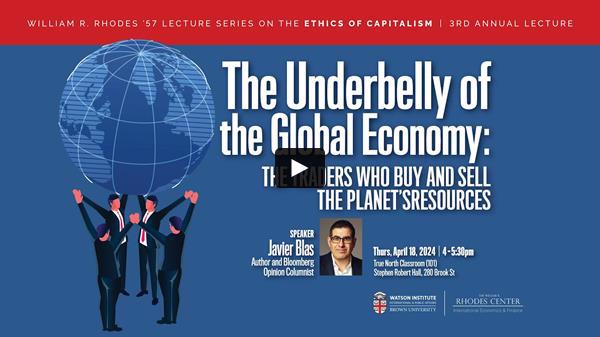
In this lecture of the
Ethics of Capitalism annual lecture series hosted by Brown University, Javier Blas, a Bloomberg energy and commodities analyst and co-author of
The World for Sale: Money, Power and the Traders Who Barter the Earth’s Resources, discusses the least scrutinized actors of the world economy: the billionaire commodity traders who buy, hoard, and sell our planet’s resources. It is the story of how a handful of powerful businessmen became indispensable cogs in global markets, enabling an enormous expansion in international trade and connecting resource-rich countries—no matter how corrupt or war-torn—with the world’s financial centers. |
|
|---|
|
|
Watching the effluvia-driven campaign cycle carom back and forth from the hoary (Biden is too old, special prosecutor claims!) to the bathetic (Trump debuts new line of sneakers and cologne!), it’s easy to lose sight of the larger forces that have produced the fiasco-in-the-making known as the 2024 presidential contest.
A long-standing shibboleth among elite political observers is that, in the end, “the party decides”—meaning that amid the unruly tumult of democratic life, sober political professionals are the adults in the room, dictating the basic terms of engagement by allocating resources and selecting leaders on a clear calculus of rational self-interest. All of this closely calibrated realist programming and counter-programming thus delimits the art of the possible in this, our sage, reasonable, and eternally difference-trimming American republic.
[Full story]
By Chris Lehmann (The Nation, 2/21/2024) |
|
|---|
|
Yale economist Ray C. Fair, in the introduction to his 2002 book
Predicting Presidential Elections and Other Things, takes note of W. H. Auden’s lines “Thou shalt not sit / With statisticians nor commit / A social science.” “I am giving the opposite advice,” Fair writes. “Come sit with statisticians and social scientists a while and see what they can do.”
In my heart, I want to go with Auden over Fair. Could there be a less enticing seduction than “come sit with statisticians”? But every election cycle, the social scientists lead me into temptation. I pull up my chair, tug at my shirt collar, and watch in fascination as they unveil their models.
By Dave Denison (The Baffler, 4/25/2024) |
|
|---|
|
The evidence is clear and mounting: teenagers are increasingly miserable and anxious, and the grown-ups are desperate to allay this. But as we decry the factors contributing to the crisis—social media addiction, climate despair, collapsing public civility, economic insecurity—the work of great philosophers suggests the value of a different response. What if anxiety is less a problem to be solved, and more an enduring truth of the modern human predicament? What if its hallmark discomfort opens us up to unique opportunities for transformation? Teen suffering is not a good thing. But in our headlong rush to pathologise and medicalise, to diagnose, curb and treat it, it is helpful to turn to European philosophy for a richer view.
By Sasha Mudd (Prospect, 4/16/2024)
|
|
|---|
|
|
|
What are the parallels between earlier stages of colonialism and today’s digital world? Nick Couldry and Ulises A. Mejias argue that instead of a land grab, we are today witnessing today a data grab whereby our lives, in all their aspects, are being captured and converted into commercial profits. How does this new era of informational power deepen existing global inequalities?
By Nick Couldry and Ulises A. Mejias (LSE Blog, 5/1/2024) |
|
|---|
|
Living in Vermont, and working at the state’s flagship land-grant university, whose land-grant status was founded on a “gift” of land essentially stolen from Indigenous nations, has made it important for me to embrace the question of what it means to decolonize and reindigenize here, in this place. That’s where things get challenging. The remainder of this post goes into one particularly vexing question that faces anyone who tries to deal with the issue of how to “decolonize” and act as a “settler Indigenous ally.” (I use the term “settler” knowing full well that my parents came to North America not as settler colonists but as wartime refugees, but that they and I have benefited from the settler colonial state of Canada, and more recently, in my case, the United States.)
By Adrian Ivakhiv (Immanence, July 30, 2021) |
|
|---|
|
I recently took part in a debate organized by the IAI—featuring Donald Hoffman and Susan Schneider—on the question of whether silicon computers running Artificial Intelligence (AI) software will ever become conscious. As a metaphysical idealist, I believe consciousness isn’t generated by any substrate—biological or otherwise—for it is primary. But private conscious inner life, seemingly separate from the rest of nature and delineated by the boundaries of a physical entity, is clearly something that has emerged in conjunction with biology. So, to me the question translates as: can private consciousness potentially occur in association with silicon computers?
This question is very close to my heart, for I’ve been a computer engineer for longer than I’ve been a philosopher. To me, the hypothesis of ‘conscious AI’ is just about as plausible as that of the Flying Spaghetti Monster (FSM). I admittedly can’t categorically refute the hypothesis, for the same reason that I can’t categorically refute the FSM. But just like the FSM, I don’t think we have any good reason to take the hypothesis seriously at all. Here’s why.
By Bernardo Kastrup (The Institute of Arts and Ideas, 1/17/2023)
|
|
|---|
|
|
|
|---|
|
|
In this episode of the
What’s Left of Philosophy podcast, political scientist Matt McManus joins its hosts, philosophers Gil Morejón, Lillian Cicerchi, Owen Glyn-Williams, and William Paris, to discuss his research into the history and philosophy of right-wing politics in his 2023 book
The Political Right and Equality.
They discuss the nature of conservatism as an irrationalist reaction to modernist ideas about human egalitarianism, the rhetorical strategies of the right, and the historical conditions under which moderate conservatism turns over into extremist fascist reaction. The discussion pays special attention to Edmund Burke’s aestheticization of politics and Joseph De Maistre’s formula for presenting conservative ideology as punk-rock counterculture rather than the argumentatively weak status-quo apologia it really is. It pays to know your enemy, comrades. |
|
|---|
|
|
Commons, Polycentricity, and Democracy: Building upon 50 years of Ostrom Governance Research
During the 50 years of the Ostrom Workshop, the challenges of effective governance have become vastly more complex and transboundary in nature. Recent trends of increased regionalism and autocracy have tested the effectiveness of governance institutions at all levels. Increased political polarization compounds these challenges, constraining and often undermining more participatory forms of governance.
We selected a range of posters, panels, and papers that explores, advances, and reflects upon the study of governance and institutions and the conference’s theme. The WOW7 conference program incorporates diverse theoretical, methodological, and empirical inquiries from around the world.
WOW7 will be held at Indiana University Bloomington from June 19-21, 2024.
Registration is open!
|
|
|---|
|
|
|
|
|
.
Your donations to this cause are tax-deductible under section 501(c)(3) of the IRS code. Click here to make your donation.
Image credit: Freepik |
|
|---|
|
|
|
Essential Critical Questions (ECQ) are those that stimulate deep reflective thinking and critical inquiry. They can help focus our attention on issues vital for just and peaceful sustainability transitions, reveal our cognitive blindspots, frame our dispositions to settle controversies fairly, “straighten out” our reasoning when dealing with situations of uncertainty, and trigger generation of big ideas and creative approaches for tackling complex, intractable, and truly wicked problems. |
|
|---|
|
We just started generating OCI’s list of essential critical questions, and we invite intellectual input from members of Hawai‘i civil society, as well as fellow knowledge workers laboring in various institutional domains—scientists, physicans, journalists, librarians, educators, and other members of island intelligentsia. Please make your critical thought contribution to ideas@hawaii.edu. |
|
|---|
|
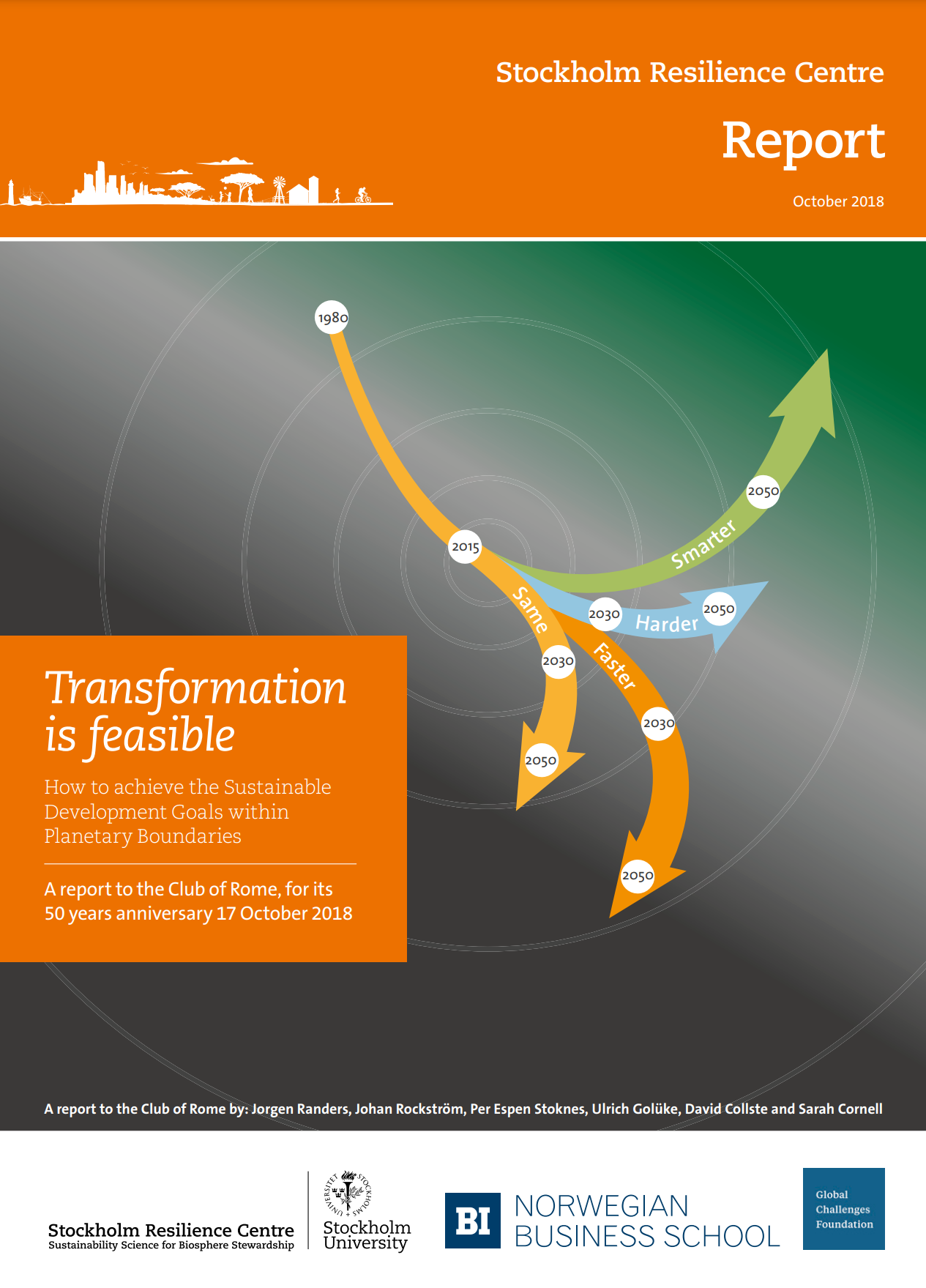
In the November 2018 issue of
Consilience Notes, following the 50th Anniversary Summit of the Club of Rome on 17–18 October 2018 in Rome, we introduced the
Transformation Is Feasible report prepared by the Stockholm Resilience Centre and BI Norwegian Business School.
Reports to the Club of Rome are peer-reviewed studies commissioned by the CoR’s Executive Committee, or suggested by members or collaborators. The reports are intended to help better understand major global issues and seek to foster a greater sense of civic responsibility. |
|
|
|---|
|
|
The dual adoption of the UN SDGs and the Paris Climate Agreement in 2015 represented a global turning point. For the first time in human history, the world agreed on a democratically adopted roadmap for humanity’s future, aimed at attaining socially inclusive and highly aspirational socio-economic development goals within a stable and resilient Earth system.
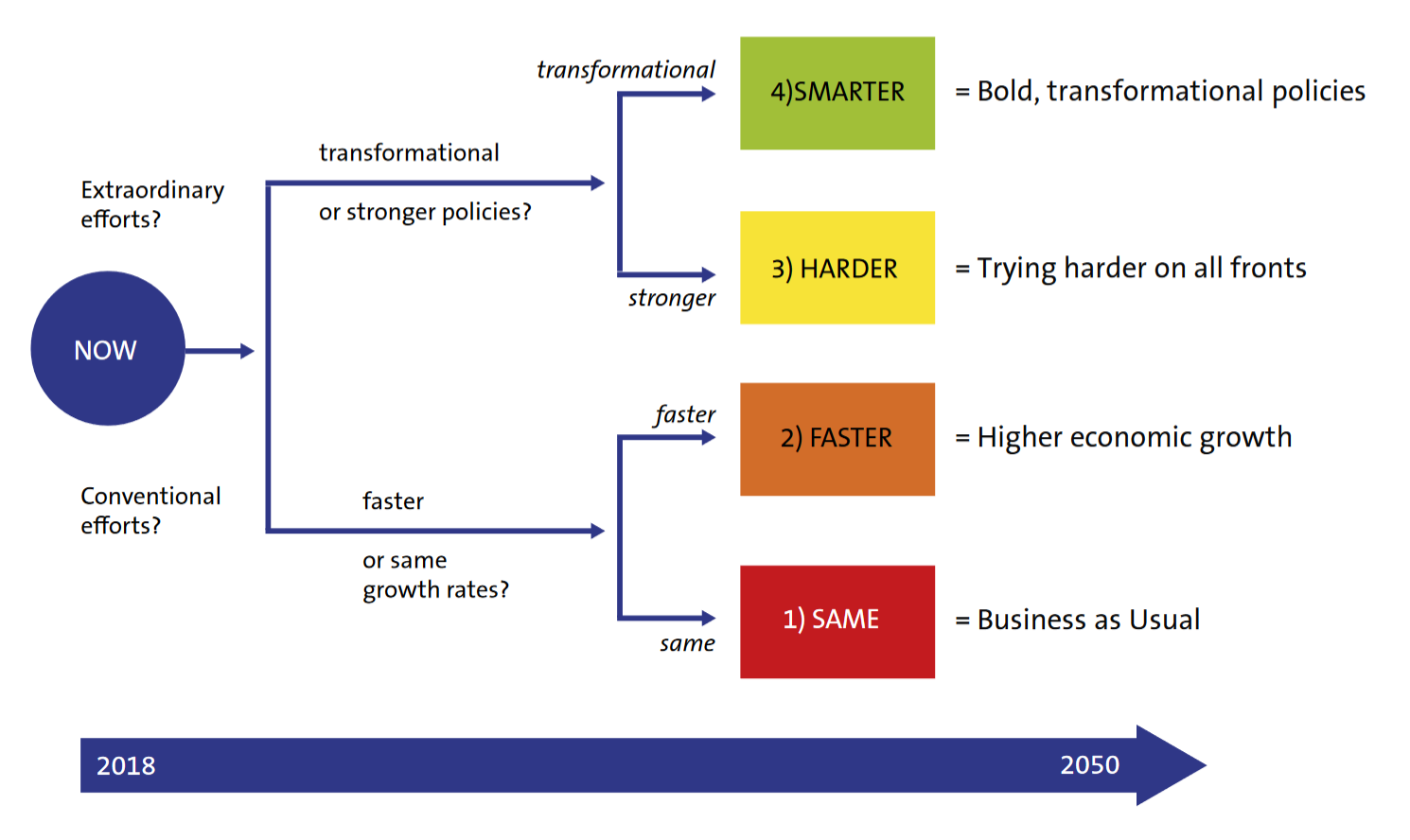
The report explored four scenarios and four corresponding futures, thereby testing four answers to our overarching question: “How can the world achieve the Sustainable Development Goals within planetary boundaries?” The report identified one such possible, smarter pathway to success—represented by a green upward-curved arrow on the cover of the report—through five transformative and synergistic actions.
The following diagram from this report summarizes each scenario and can be used as a framework for assessing the character and prospects of regional sustainability transitions. Wondering what useful insights the application of this framework to Hawaiʻi could generate, we propose the following ECQ of the month:
Which pathway best describes Hawaiʻi’s sustainability-transition efforts? |
|
Which pathway best describes Hawaiʻi’s sustainability-transition efforts?
|
|
|
|
|
|
Carbon offsets are often touted as a solution to humanity’s bad habit of emitting an awful lot of CO2. But how many of us actually know what things like carbon offsets and carbon dioxide removal are all about? This week on Sea Change Radio, we speak with David Ho, a professor in the oceanography department at the University of Hawaiʻi at Manōa. |
|
|---|
|
|
|
|
|---|
|
|
Work has always been a significant source of ethical questions, philosophical reflection, and political struggle. Although the
future of work in a sense is always at stake, the issue is particularly relevant right now, in light of the advent of advanced AI systems and the collective experience of the COVID-19 pandemic. This has reinvigorated philosophical discussion and interest in the study of the future of work. The purpose of this survey article is to provide an overview of the emerging philosophical field that engages with the future of work, with a special focus on equality and justice, and to outline a research agenda that can help the field to develop further.
Section 2 provides some historical context for the current surge in interest in the topic. Then, we discuss what work is and whether there is a philosophy of work (Section 3). The four main sub-debates we then turn to concern the value of work (Section 4), distributive justice and work (Section 5), productive justice (Section 6), and institutional reforms prompted by changes in how work is organized (Section 7). The final section discusses the importance of the distinction between ideal and non-ideal theory in philosophical investigations into the future of work.
.
|
|
|---|
|
|
|
Keywords and meta-markers: value of work; future of work; applied philosophy; ideal and non-ideal theory |
|
Source:
Furendal, M., Brouwer, H. and van der Deijl, W. (2024).
The Future of the Philosophy of Work. Journal of Applied Philosophy, 41, 181-201.
https://onlinelibrary.wiley.com/doi/full/10.1111/japp.12730
.
.
.
.
.
.
.
.
.
.
.
.
.
|
|
|---|
|
|
|
|---|
|
| |
The belief that AI technology is on the cusp of causing a generalized social crisis became a popular one in 2023. Interestingly, some of these worries were voiced from within the tech sector itself. While there was no doubt an element of hype and exaggeration to some of these accounts, they do reflect the fact that there are troubling ramifications to this technology stack. This conjunction of shared concerns about social, political, and personal futures presaged by current developments in machine learning and data science presents the academic discipline of computing with a rare opportunity for self-examination and reconfiguration. This position paper endeavors to do so in four sections.
The first expands on the nature of the AI crisis for computing. The second articulates possible critical responses to this crisis and advocates for a broader analytic focus on power relations. The third section presents a novel characterization of academic computing’s epistemological field, one which includes not only the discipline’s usual instrumental forms of knowledge but reflexive knowledge as well. This reflexive dimension integrates both the critical and public functions of the discipline as equal intellectual partners and a necessary component of any contemporary academic field. The final section will advocate for a conceptual archetype—the Public Computer Intellectual—as a way of practically imagining the expanded possibilities of academic practice in our discipline, one that provides both self-critique and an outward-facing orientation towards the public good. It will argue that the computer education research community can play a vital role in this regard.
_
|
|
|---|
|
|
|
Keywords and meta-markers: the social meaning of digital technology; instrumental knowledge; reflexive knowledge; cognitive enfeeblement |
|
Source:
Connolly, R. (2024).
Public Computing Intellectuals in the Age of AI Crisis. Computers and Society, arXiv:2405.00860.
https://doi.org/10.48550/arXiv.2405.00860
.
.
.
.
.
.
.
.
.
.
.
.
.
.
.
.
.
.
.
. |
|
|---|
|
|
|
|---|
|
| |
Business schools have two interconnected, critical responsibilities: preparing students to lead in times of ecological and societal turmoil while, ensuring their education aligns with global standards. Adherence to neoliberal principles limits business schools’ effectiveness by stifling diverse perspectives, positive leadership development and evaluation of degrowth as a viable alternative. The constraining influences of neoliberal ideology—termed the “neoliberal straitjacket” is impeding the impact of the Principles for Responsible Management Education (PRME) and the United Nations Sustainable Development Goals (UNSDGs).
Advocating for an expansion of student perspectives to alternate economic systems by critiquing the constraining influences of neoliberal ideology, this article introduces the Degrowth Pedagogy Framework (DPF) as a novel educational solution. By adopting a constructivist and multi-paradigmatic approach, the DPF aims to integrate degrowth principles into business education, fostering both a “childlike mindset” to imagine degrowth in practice, and a receptiveness to new paradigms. Doing so presents degrowth as a legitimate challenge to neoliberal capitalism. The DPF holds promise for transforming business schools to serve as catalysts and agents of change and to progress the PRME agenda. Business schools must educate leaders to think expansively, lead positively, and envision a more sustainable future for all.
_
|
|
|---|
|
|
|
Keywords and meta-markers: degrowth; pedagogy; business schools |
|
Source:
Liuzzo, C. (2024).
Beyond the Neoliberal Straitjacket: The Degrowth Pedagogy Framework (Dpf) for Business Schools. SSRN.
http://dx.doi.org/10.2139/ssrn.4776642
.
.
.
.
.
.
.
.
.
.
.
.
.
.
.
.
.
.
.
. |
|
|---|
|
|
|
|---|
|
|
Eye of the Storm: Facing Climate and Social Chaos
with Calm and Courage
In the following episode of the
Building Up: Resilience podcast, its hosts talk with Dr. Terry LePage, MDiv, PhD, who wrote Eye of the Storm: Facing climate and social chaos with calm and courage. The book is meant to help people find stories, inner resources, and practical tools for living with compassion, courage and even joy in the face of collapse. It comes from her small group work with collapse-aware people in the international Deep Adaptation Forum (deepadaptation.info/events, search for her name.) She has worked as a research chemist, transitional minister, and hospice chaplain. She lives in Southern California and facilitates Nonviolent Communication practice groups, grief circles, and community circles both locally and for the international Deep Adaptation Forum. She would like you to have access to the book - note that PDF and audio versions are free.
|
|
|---|
|
|
OPEN-ACCESS BOOK:
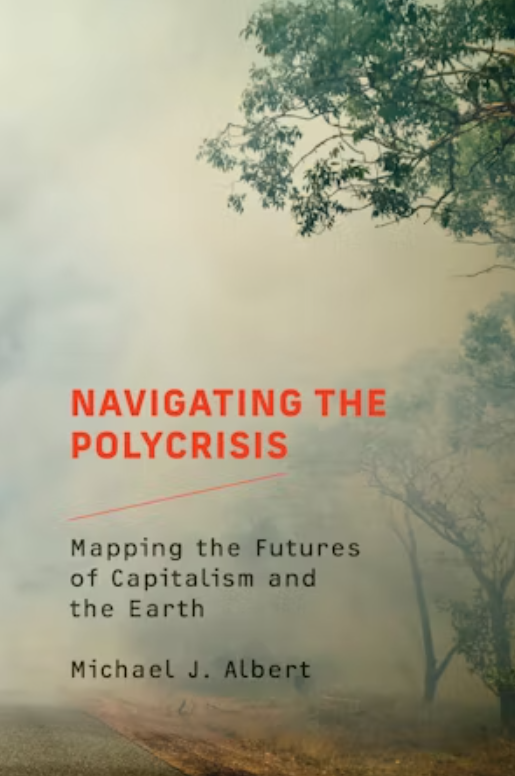
NAVIGATING THE POLYCRISIS |
|
|
|
|
The world-system of which we are all a part faces multiple calamities: climate change and mass extinction, energy supply shocks, the economic and existential threat of AI, the chilling rise of far-right populism, and ratcheting geopolitical tensions, to name only a few. In
Navigating the Polycrisis (MIT Press, 2024) Michael Albert seeks to illuminate how the “planetary polycrisis” will disrupt the global community in the coming decades and how we can best meet these challenges. Albert argues that we must devote more attention to the study of possible futures and adopt transdisciplinary approaches to do so. To provide a new form of critical futures analysis, he offers a theoretical framework—planetary systems thinking—that is informed by complexity theory, world-systems theory, and ecological Marxism.
|
|
|---|
|
|
|
Navigating the Polycrisis builds on existing work on global futures and makes three main contributions. First, the book shows that in order to map out possible futures of the capitalist world-system, we must analyze the intersections and feedbacks between its numerous cascading crises—including the climate emergency, energy crises, stagflation, food system disruption, pandemics, geopolitical conflicts, and emerging technological risks. Second, the book develops an innovative transdisciplinary approach to global futures by combining critical social theory with the insights of climate and energy modelling. And third, rather than relying on idealist blueprints or ungrounded speculation, the book contributes to scholarship on postcapitalist futures by analyzing the processes, mechanisms, and struggles through which egalitarian transitions beyond capitalism might occur.
A much-needed work of global futures studies,
Navigating the Polycrisis brings the rigor of the natural and social sciences together with speculative imagination in order to illuminate and shape our global future.
|
|
Upcoming Colearning Events | June
–July 2024 |
|
June 7 @1–3 p.m.
Digital Knowledge and Media Commons | Post-Digital Transformation Lab’s coworking session (lab’s team and invited guests) @CPB Tidepools (Koʻa conference room).
June 12 @12
–1:30 p.m.
The Semiotics of Othering in the Land of Aloha | Colloquium design charrette; Metanoia Series LC: The Semiotics of Solidarity.
June 20 @6
–8 p.m.
Panta Rhei Hui: Marking the Arrival of Northern Solstice | PKI’s Open-Air Philosophy Events; Metanoia Series LC: Philosophy as Social Practice and a Way of Living.
June 27 @3
–4:30 p.m.
On Epistemic Authority, Expertocracy, and the Popular Notion of
Real Science in Hawaiʻi | Paideia Series LC: Knowledge Decommodification and Science Decolonization.
July 11 @12–1:30 p.m.
Remedy, Poison, or Scapegoat? Understanding Hawaiʻi’s Relationship with Tourism through the Concept of Pharmakon | Metanoia Series LC: Is the Thing a Thing?
July 19 @3–5 p.m.
Contextual Intelligence | Phronesis Series LC: Complex Thinking and Collective Intelligence for a World of Complexity.
July 27@5:30–8:00 p.m.
What’s Growing On? | PKI’s networking mixer for fellow knowledge gardeners and their community partners. Location TBC. |
|
*All times are HAT. Additional colearning and community-outreach event announcements may be added in the next Metascope. Note that we’ve made schedule changes for several events announced in the previous issue. To request event participation details, contact us at think@hawaii.edu.
Should you miss the advance organizer microlab or briefing for a specific learning stream, we highly recommend requesting a one-hour online orientation prior to attending the learning activity of interest. |
|
Do you prefer a virtual meet-and-greet? Visit the
count-me-in web page [URL: join.imua.cc] to schedule a video chat or submit your questions, or send a subscribe-to-news-alerts request at imualabs@hawaii.edu. Because they are powered by volunteers, our program and event repertoire may occasionally be affected by unforeseen schedule changes. We appreciate your understanding and patience in such situations. |
|
This publication and the new
Consilience Learning Series are co-produced by IMUA Labs* and the People’s Knowledge Institute (PKI), a critical social learning system and an experimental vehicle for integral, post-formal education, and transformational community research.
The central goal of our publications, knowledge-sharing streams and collaborative learning exercises is to cultivate civic intelligence, systemic literacy, and cognitive competences essential for living in a complex, dynamic world, and to elevate the community’s possession of truth, knowledge, and rational beliefs that support the ecological way of life. We iteratively develop and test innovative institutional-epistemology and knowledge-management know-how to improve the civic community’s learning capacity and self-awareness and to facilitate deeper intersectoral collaboration to respond to the grand challenges of green transformation.
As a collective intelligence initiative, we welcome a diversity of ideas and epistemic pluralism. Thus, the arguments expressed in our knowledge syntheses, bulletins, and event announcements do not necessarily reflect the views of IMUA Labs, PKI or the Hawai‘i Institute for Socio-Ecological Transformation (HISET). Should you spot a data error, a missing critical topic or issue, or an instance of faulty reasoning in our transdisciplinary publications, please submit your feedback to our knowledge gardeners and science communication specialists at
imualabs@hawaii.edu. |
|
|---|
|
*IMUA Labs @UH is a short name of the IMUA Scholarly Society for Epistemic Innovation, Integral Studies, and Transformational Research |
|
|---|
|
|
|